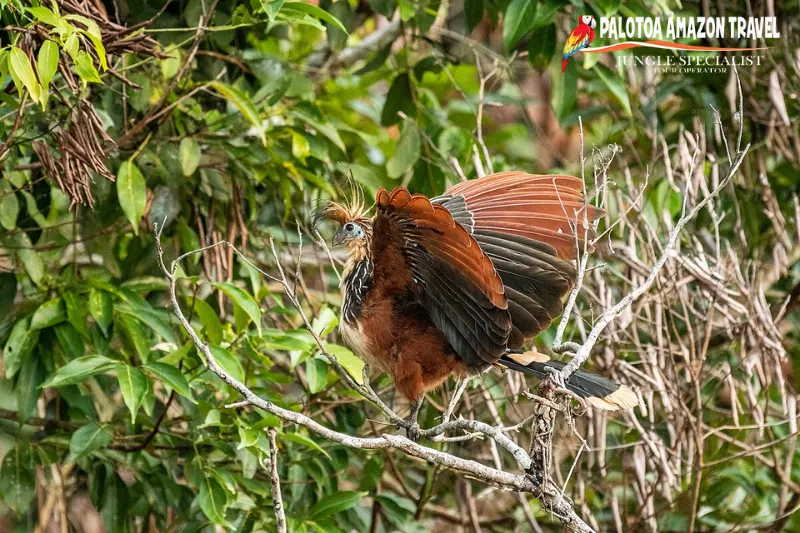
There’s a line researchers use when they talk about this place. One tree in the Manu Biosphere Reserve can host more ant species than the entire United Kingdom.
The Manu Biosphere Reserve sits deep in the Peruvian amazon rainforest, and calling it just a forest doesn’t really cover it. Scientists call it a living time capsule. Every plant, every creature, every insect carries millions of years of evolutionary history. Lose a species and that chapter disappears. Not metaphorically. Literally gone.
Protecting something this size takes more than conservation enthusiasm. UNESCO stepped in, gave it World Heritage status, and built a specialized zoning system around it designed for biosphere conservation at a scale most parks never attempt. What came out of that process is one of the most intact wild places left anywhere.

The Manu Biosphere Reserve spans the Andes down into the Amazon, stacking three completely different ecosystems inside one boundary. Jaguars, giant river otters, and thousands of species that exist nowhere else live here under a UNESCO three-zone protection model. Getting there from Cusco takes days of overland and river travel. Pack for both jungle heat and surprise cold fronts.
People who first ask where is Manu on a map are usually surprised. It sits right where the Andes collapse into the Amazon, spanning two regions, Cusco and Madre de Dios, in a zone most travelers fly over without realizing what’s below.
Picture an ecological skyscraper. Top floor is freezing Andean peak. Ground floor is steaming lowland jungle. That vertical drop is called zonation and it’s the whole reason the Manu Biosphere Reserve holds the species numbers it does.
Three tiers. Harsh highlands at the top, cloud forest in the middle, dense lowland jungle at the bottom. Animals can’t easily move between floors, so each altitude spent millions of years developing its own completely separate communities. That isolation drove diversity.
Halfway down, warm basin air hits the cold mountain wall and gets stuck. Permanent fog. Inside that fog is the cloud forest, damp and dripping, where plants evolved to pull moisture straight from the air. Thousands of species found nowhere else came out of that evolutionary pressure.
Lower down, Andean rainfall drains into the basin and fertilizes everything below it. The abundance that produces is what allows apex predators to exist here at the densities they do. The amazon rainforest at ground level runs on that nutrient flow from above.
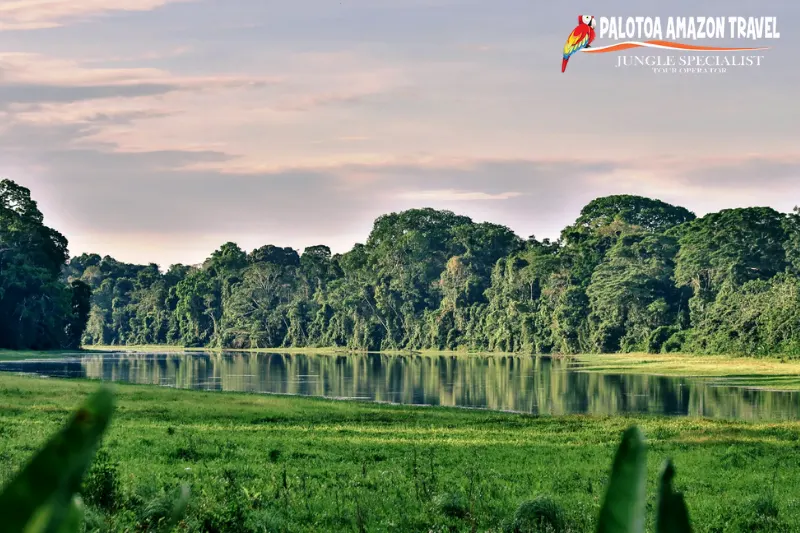
Rivers in the lowlands shift constantly. When a bend gets cut off it leaves a crescent shaped oxbow lake, called a cocha. Calm, nutrient rich, no current. Giant river otters claimed these lakes a long time ago.
They grow up to six feet. Hunt in groups. Actively manage fish populations and stop any single species from dominating the water. That’s what keeps the oxbow lakes functioning as a genuine wildlife sanctuary rather than a stagnant pond with one kind of fish in it.
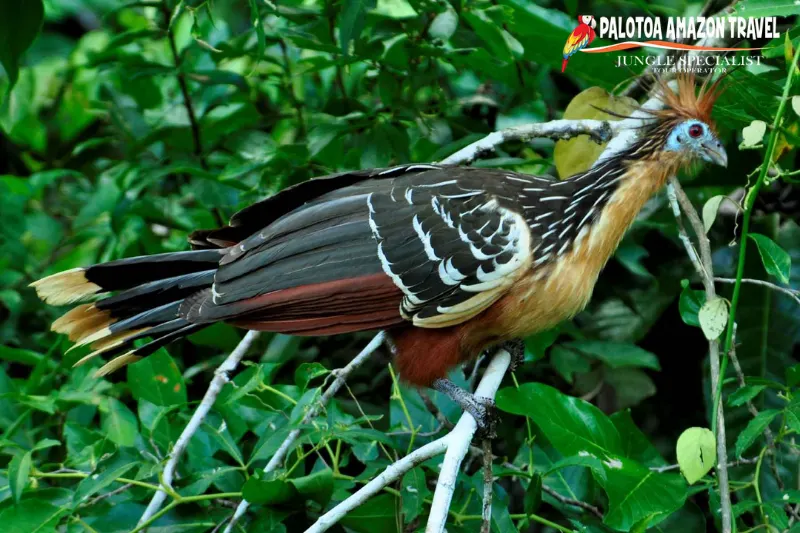
Spotting wildlife in Manu takes patience and knowing what to look for. The birds of Manu alone number over 1,000 documented species, and the reptiles of Manu, black caimans, river turtles, anacondas, patrol the same slow moving waters alongside the fish species in Manu recorded across rivers and oxbow lakes. Local guides teach three specific behaviors worth watching:
Dawn is the window for all of it. Muddy riverbanks at first light. Jaguars especially. They range across enormous territories which is why protecting them means guarding thousands of square miles, not just one lake.

Most parks draw a hard line. Nature in, people out. The Manu Biosphere Reserve doesn’t work that way, and that’s actually what makes it function. UNESCO built a three tier model around the idea that biosphere conservation needs flexibility more than fences.
That outer ring isn’t a compromise. It’s the whole point. The forest was never empty. Indigenous communities built their lives inside it long before any conservation designation existed, and the model accounts for that.
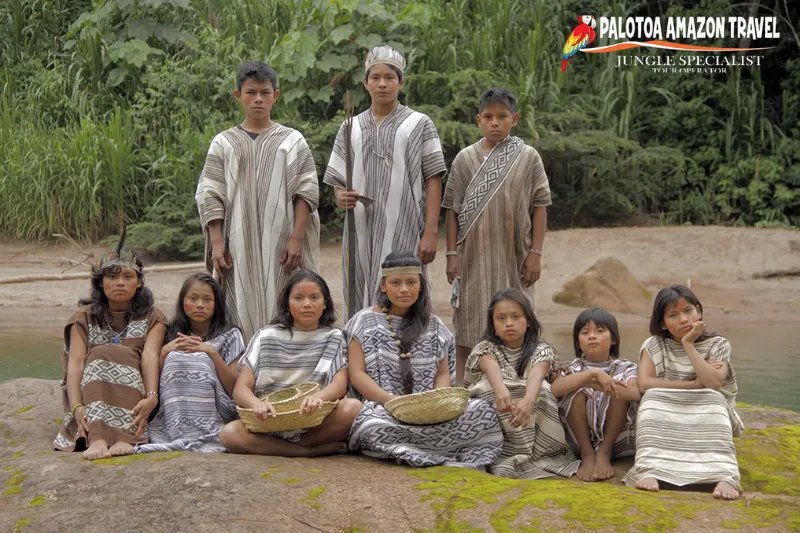
The Matsigenka have lived in this ecosystem for generations. What they carry is called Traditional Ecological Knowledge, a deep accumulated understanding of how everything in the forest connects to everything else.
It shows up practically in ethnobotany. Palm wood for shelters. Dragon’s blood tree sap on wounds. These aren’t folk practices. They’re refined applications developed over centuries inside a system that doesn’t forgive mistakes easily.
Ethical cultural exchange programs let visitors access this knowledge without exploiting it. The difference between tourism that extracts and tourism that funds continued stewardship is real, and choosing the right operator is how travelers end up on the right side of it.

The journey down from Cusco is not a transfer. It’s part of the trip. The descent moves through completely different worlds and the stages go like this:
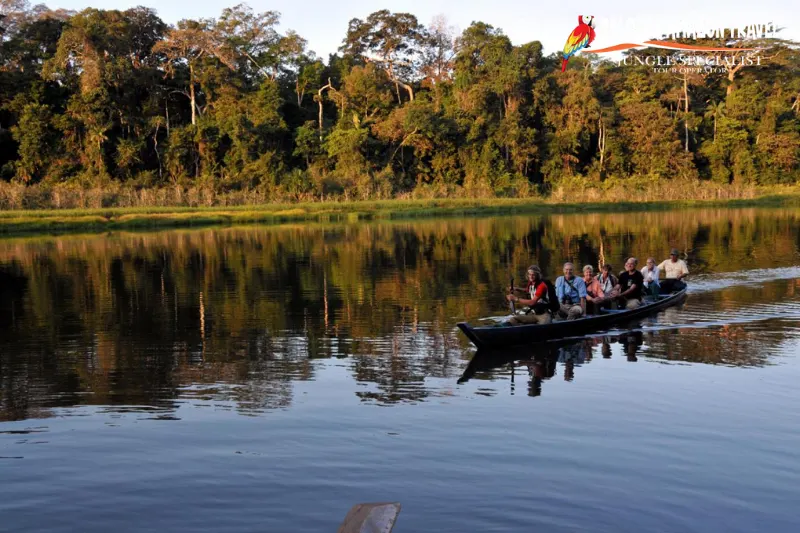
Once on the water the amazon rainforest entry is real. The best ways to explore Manu from this point depend on the zone and days available. Local guides are not optional. Navigation, wildlife reading, weather shifts, all of it runs on knowledge that takes years to build.
Both are genuine hotspots. The Manu vs Tambopata wildlife comparison comes down to what kind of experience someone actually wants:
Different trips for different people. Neither one is the wrong answer.

May through October. Dry season, shrinking riverbanks, animals concentrated and visible. That’s the target.
What catches people off guard is the cold. Friaje fronts roll up from Antarctica without much warning and drop the temperature fast. Jungle one day, shivering the next morning on the river. A warm layer is not a precaution, it’s a requirement.
Gear that actually matters:
Those five cover most situations. Everything else is secondary.
The Manu Biosphere Reserve isn’t just scenery. It regulates water cycles, produces oxygen, and holds species with genetic information that hasn’t been studied yet. Choosing operators who work with indigenous communities turns the trip into direct conservation funding. An economic alternative to logging that actually competes financially.
People who go and come back and talk about it become part of how the place stays protected politically. That’s not nothing. Biosphere conservation at this scale needs public attention to stay viable long term.

Vertical zonation stacks three isolated ecosystems from highland to lowland. Each tier developed unique species over millions of years. Cloud forests act as evolutionary laboratories. Andean rainfall supercharges the lowland jungle below.
Core for science only. Manu Reserved Zone for regulated access. Manu Cultural Zone for sustainable indigenous community life. The Matsigenka stewardship is built into the model, not excluded from it.
Otters in oxbow lakes. Jaguars along riverbanks at dawn. Patient observation with a skilled local guide is the actual method for both.
Tambopata for comfort and quick access. Manu for deeper immersion and wilder encounters with more time and budget.
Dry season, May through October. Prepare for friaje cold fronts. Waterproof binoculars, quick-dry long sleeves, DEET-free repellent, headlamp, waterproof camera housing.