


Something empties the bird feeder every night and the footprints near the garden fence do not belong to anything seen during daylight hours. Most people never find out what visits after dark because they are asleep when ihd2t happens. Camera traps for wildlife solve that problem without requiring anyone to sit outside in the cold waiting.
These devices work as digital scouts that run continuously without supervision. Whether called trail cameras or something else entirely, they detect moving heat signatures and capture animal behavior without producing sound or light that would change what the animal does. The footage that comes back is what actually happens, not a performance for an observer standing nearby.
Learning a few basic wildlife photography tools transforms a curious person into someone who understands what is actually living in the surrounding area. That shift from wondering to knowing is what makes this hobby stick for most people who try it.
Camera traps for wildlife detect moving heat and turn nighttime mysteries into clear documented observations without disturbing the animals involved. This guide covers PIR sensors, trigger speed, recovery time, no-glow versus low-glow flash options, knee-height mounting, vegetation clearing, and false trigger prevention. Long-term power through solar panels and remote image access through cellular upload are both addressed alongside time-lapse monitoring for broader ecological tracking. The connection between backyard projects and global conservation citizen science runs through the final section alongside ethical guidelines for starting a responsible camera trap setup.
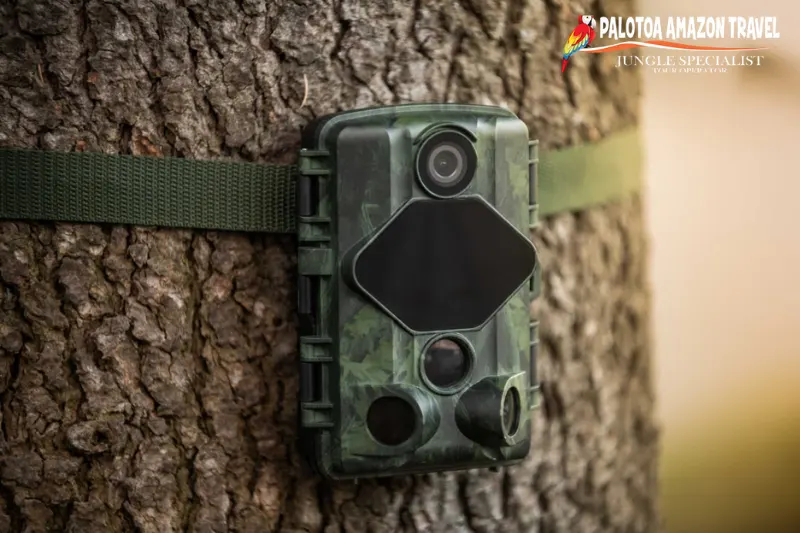
Porch lights trigger for blowing bushes. Camera traps for wildlife research do not work that way. Instead of reacting to movement, they use a Passive Infrared sensor, called a PIR, that detects moving heat rather than shifting objects. A raccoon’s body heat triggers the camera while a rustling leaf in the same frame does nothing.
Understanding how that works helps produce better footage. The camera lens sees a wide area but the sensor only reads heat within a specific slice of that space. That gap between detection zone and field of view is the difference between a camera that fires on animals and one that fires on everything.
When an animal enters the detection zone a sequence runs automatically. The sensor reads baseline ambient temperature first, then registers the thermal contrast created by a warm body moving through cooler air, then fires. Hot summer afternoons can occasionally fool the system when sun-warmed ground matches an animal’s body temperature and blank photos start appearing. Raising PIR sensitivity helps the sensor notice smaller temperature differences when that happens.
Detecting heat is only part of what determines whether a usable photo results. The camera also needs to fire fast enough to catch the animal before it moves out of frame. A fox sprinting past a slow sensor produces a photo of an empty lawn with a disappearing tail in one corner. Trigger speeds under 0.5 seconds catch the face instead.
After the first photo fires the device needs to reset before it can fire again. That recovery window matters when behavior unfolds across multiple animals or sequential moments. A ten-second recovery photographs a mother raccoon and misses every kit trailing behind her.
Night illumination requires choosing between two infrared flash types. Low-glow bulbs produce brighter images but emit a faint red point of light that skittish animals sometimes notice. No-glow models are completely invisible and preserve natural behavior at the cost of slightly dimmer footage. The choice depends on whether image quality or behavioral authenticity matters more for the specific goal. Researchers running a tour jungle night walk in tropical reserves consistently prefer no-glow models to avoid altering animal movement patterns along active trails.
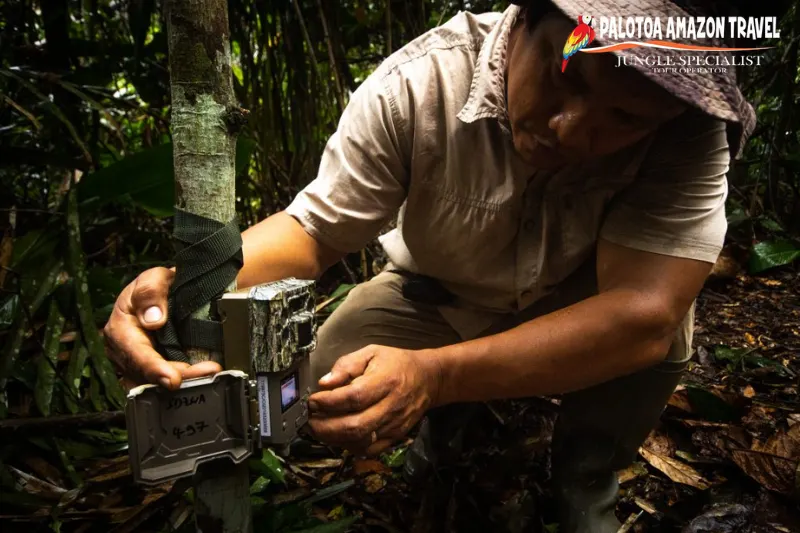
Most beginners mount at chest height and get photos showing the tops of deer heads or nothing at all when smaller animals pass through. Two feet off the ground is the right starting point for most backyard wildlife. That height produces eye-level portraits of foxes, raccoons, and anything else moving through the area.
A field checklist worth following before walking away from a freshly mounted camera:
Clearing foreground vegetation does more than frame a cleaner shot. A sun-warmed fern moving in wind creates exactly the heat signature the PIR sensor is looking for and fills storage with empty photos. Recessing the camera slightly behind a tree trunk on public trails reduces theft risk without affecting image quality.
Standard AA batteries work for initial testing and run out faster than most people expect when a camera is firing regularly through active nights. Pairing the camera with a small solar panel creates a self-sustaining system that charges continuously and removes the need for manual battery swaps every few weeks.
Getting images back without hiking out to retrieve a memory card requires choosing a cellular model that transmits directly to a smartphone. SD card models cost less and work fine for locations with regular access. The right choice depends on how far the camera sits from where the images need to be reviewed.
Weatherproof housing protects electronics from rain and freezing morning dew regardless of which power and data option gets chosen. Time-lapse mode adds a different kind of monitoring to the standard motion-triggered setup, taking scheduled photos that document seasonal changes in vegetation and snow levels rather than waiting for animals to pass. In cloud forest zones where the cock of the rock bird moves through at predictable dawn hours, time-lapse combined with a motion trigger gives researchers two separate data streams from one device.
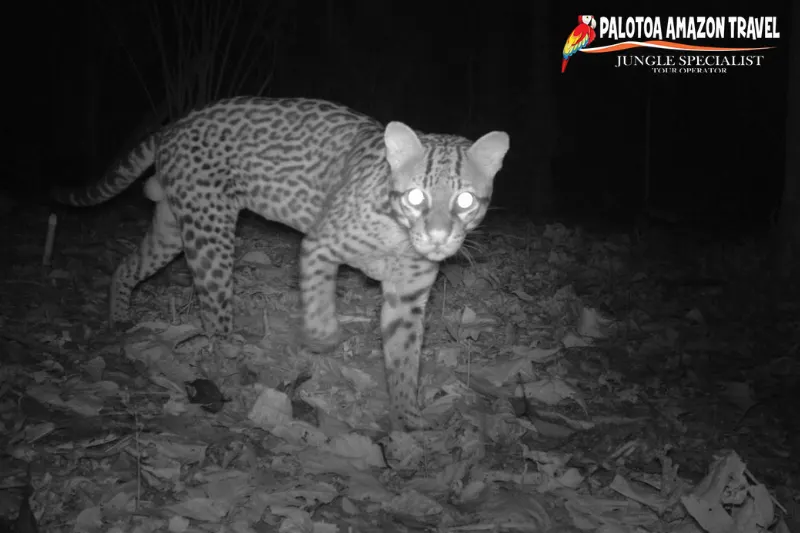
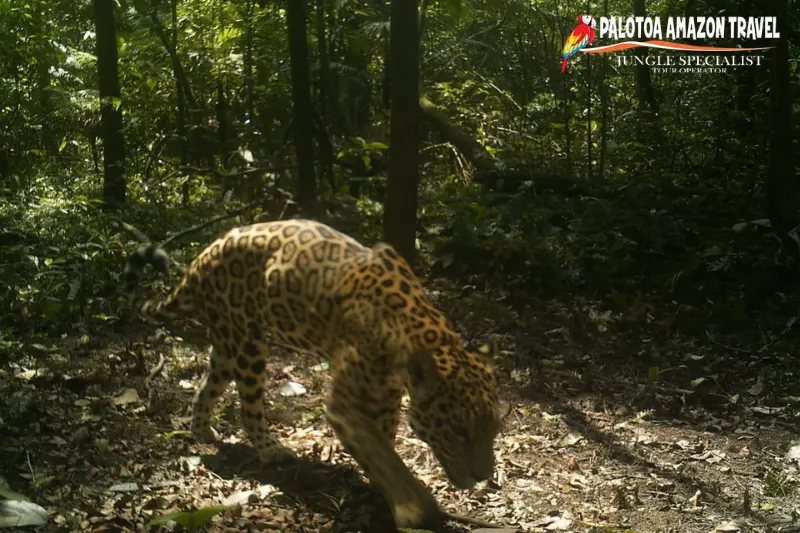
The same device catching raccoons in a backyard is running in Manu National Park and Tambopata right now tracking jaguars. Researchers in dense tropical reserves depend on camera traps for wildlife monitoring because sitting in the jungle waiting for nocturnal predators to pass is not a practical research method. The technology bridges that gap between what needs to be known and what can be physically observed.
Sharing backyard findings with public wildlife databases connects a local project to regional biology. Biologists use that accumulated data to identify wildlife corridor protection zones, the natural greenbelts animals use to move between habitats without crossing roads or developments. Participants joining a tour birdwatching in Manu 5D often contribute trail camera footage from lodge perimeters that feeds directly into long-term species monitoring databases maintained by park researchers.
Remote imagery from these systems also supports ecotourism by producing documented evidence that hidden ecosystems are active and functioning. Groups on a tour birdwatching in Manu 7D regularly encounter active camera trap stations near oxbow lakes where macaw flight paths and clay lick activity are being documented across multiple seasons. Knowing that the same accessible tools watching a garden help protect vital rainforests changes how the hobby feels. Camera traps for wildlife at a backyard scale and a conservation scale are the same tool applied to different distances from the same problem.
The mystery of what empties the bird feeder every night has a straightforward answer available to anyone willing to mount a camera and wait a few days. Understanding how motion and heat sensors work together removes the guesswork from camera trap setup and replaces it with a process that produces real footage on a reliable timeline.
An entry-level camera strapped at knee height to a sturdy tree pointed away from direct sun is enough to start. Ethical observation means keeping cameras away from active nesting areas and keeping the precise locations of vulnerable species private when sharing results online. Those two practices protect animals that do not benefit from increased attention.
Wildlife camera traps reveal a functioning nocturnal highway right outside the back door that most people have no idea exists. Reviewing the first memory card or remote upload after a few nights changes how the surrounding neighborhood reads permanently. Camera traps for wildlife turn a vague awareness that animals are out there into specific documented knowledge about exactly which ones, when, and how often.
PIR sensors detect moving heat rather than movement itself. The sensor establishes a baseline ambient temperature and fires when a warm body creates thermal contrast within the detection zone. Hot days can reduce reliability when ground temperature approaches animal body temperature, and raising sensitivity corrects that.
Under 0.5 seconds trigger speed catches fast-moving animals before they leave the frame. Recovery time determines how quickly the camera resets for a second shot. Slow recovery misses sequential animals and follow-up behavior that unfolds immediately after the first image fires.
Two feet off the ground, lens facing north or south, angled 45 degrees along a trail, foreground vegetation cleared. That combination produces eye-level footage, avoids glare, gives the sensor more reaction time, and eliminates false triggers from sun-warmed plants moving in wind.
No-glow stays invisible to animals and preserves natural behavior at the cost of dimmer images. Low-glow produces brighter footage but emits a faint red point that skittish animals occasionally notice. The choice depends on whether image quality or undisturbed behavior matters more for the specific goal.
Solar panels handle long-term power without manual battery swaps. Cellular models transmit images remotely while SD card models require physical retrieval. Weatherproof housing protects electronics across seasons. Contributing findings to public wildlife databases supports regional conservation research while keeping cameras away from nesting areas and keeping vulnerable species locations private protects the animals being documented.

