


The first thing most people notice in Madre de Dios is the sound. Howler monkeys before sunrise. Birds with no equivalent anywhere else on the planet. Air that smells like soil and wet vegetation and something harder to name. This is Peru’s primary Amazon gateway, and jungle excursions here work differently from what most travelers picture beforehand. The wildlife is not staged. Nothing here runs on a visitor schedule.
Puerto Maldonado is the logistical entry point. Manu National Park is the actual destination. Getting from one to the other takes time, and that time on the river is part of the experience, not wasted hours. Primary forest, the kind that has never been cleared, starts well past the park boundary. Amazon tours that reach it operate under strict UNESCO Biosphere Reserve guidelines that keep the interior intact.
This guide covers the main activities and logistics for visiting Madre de Dios and Manu National Park. It breaks down the difference between the Cultural and Reserved Zones, what to expect at the macaw clay lick, oxbow lake safaris, canopy towers, and night walks. Practical information includes transport from Cusco, packing essentials, and lodge selection. A five-day itinerary ties the full circuit together.
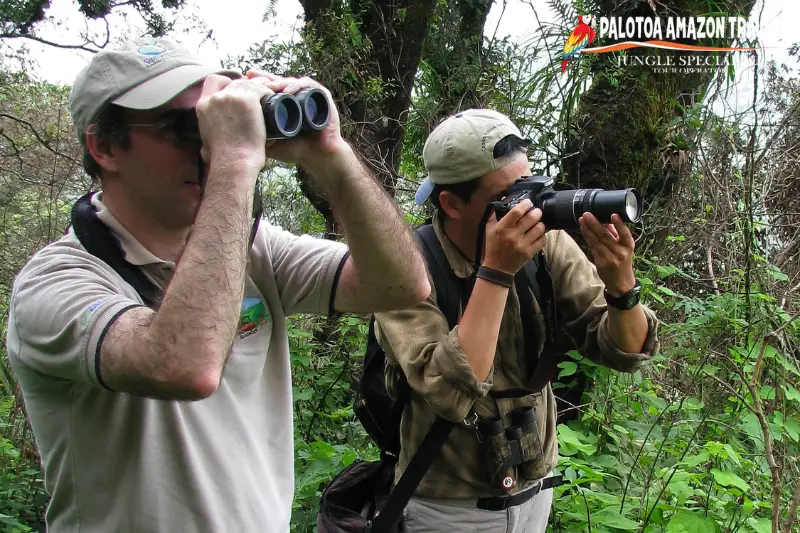
Manu works in concentric zones. Tours in cultural zone are accessible to most travelers with a standard 3 to 4 day window. The outer ring covers cloud forest, excellent bird watching, and good trail access. Large mammal sightings are possible but not reliable here.
Tours in reserved zone are a different commitment. Five to eight days minimum, higher costs, and authorized guides who manage all permits. Independent access does not exist. The isolation is what produces results. Primary forest wildlife density is measurably higher than anywhere with a human footprint nearby.
The wildlife in the Reserved Zone behaves differently from animals in accessible areas. Jaguars sunning on riverbanks. Giant otters hunting in family groups without retreating at the sound of a boat. These encounters happen with regularity in the Reserved Zone and rarely in the Cultural Zone.
The practical breakdown:
Jungle excursions into either zone require the same advance planning. Permits fill up. Authorized guide slots are limited. Booking months ahead is the standard, not the exception.
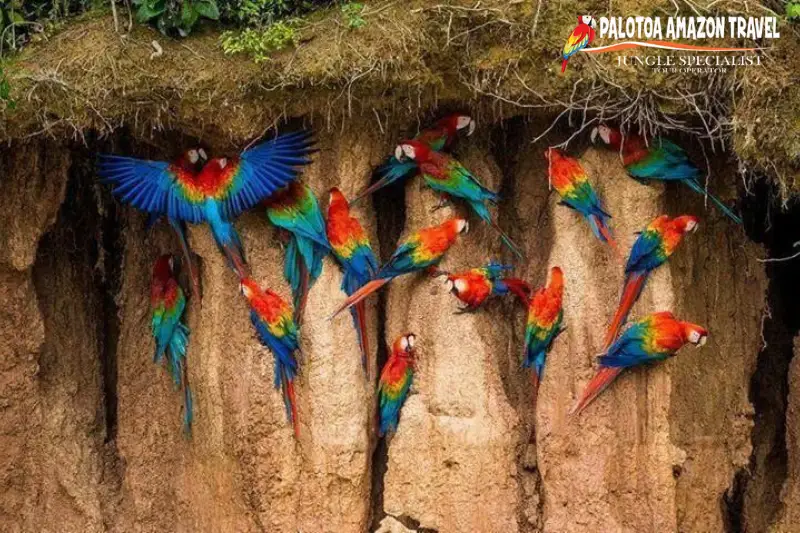
A parrot clay lick is a clay bank on a riverbank where hundreds of macaws and parrots gather at dawn to eat mineral-rich soil. The colors when the birds land in numbers, red, blue, yellow, shifting constantly as different species cycle through, make this one of the defining amazon rainforest activities in Manu. The biology is straightforward. Seeds and unripe fruit in the canopy contain natural toxins. The sodium compounds in the clay neutralize those toxins. The birds eat clay because the alternative is a restricted and potentially harmful diet.
Timing is fixed. The birds arrive as the first light hits the clay wall. Pre-sunrise departure is mandatory. Arriving late means an empty bank and nothing to show for the early morning.
August through October is the strongest window for bird watching at the collpa. Dry season drops river levels, exposes more clay surface, and peaks bird activity. Wildlife experiences here during dry season are consistently more concentrated than wet season visits.
A visit oxbow lake experience starts before the boat even stops moving. These isolated lagoons form when rivers shift course over centuries and cut off old bends. Still water, fruiting forest overhead, fish concentrating in the shallows. Every predator in the surrounding forest eventually comes here.
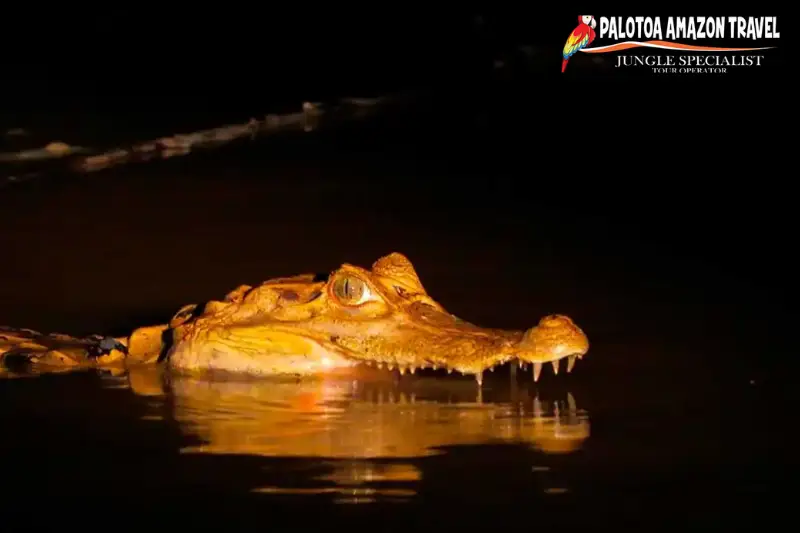
Amazon caiman search on these lakes happens mostly in the late afternoon and after dark. The armored snout breaks the surface, eyes just above the waterline, body invisible below. Black caimans reach sizes that surprise most visitors who have only seen smaller species elsewhere.
Giant river otters are the main event for most people. Up to six feet long, hunting in coordinated family groups, loud enough to hear from the far side of the lake. Jungle excursions to Salvador Oxbow Lake and similar sites use paddle-powered catamarans for silent approach. Motor noise ends the encounter before it starts.
Catamaran etiquette that actually matters:
Nature hikes along the lake edge after the floating safari extend the morning productively. Ground-level sightings of both caimans and river birds are common on the shoreline paths.
The jungle night walk is a separate category from everything else on this itinerary. After dark the forest floor activates in ways that are completely invisible during daylight hours. Night monkeys in low branches. Jewel-toned tree frogs on wet ferns. Tarantulas and insects that stay hidden all day. Headlamps catch eye reflection before the body becomes visible. Guides who know this forest read animal positions from subtle cues that take years to develop.
Safety on night walks has no flexibility:
Canopy towers work the opposite end of the vertical range. A 40 meter climb up a staircase built around a large Kapok tree puts you in the emergent layer above the main canopy. Toucans, monkeys, species that never descend to ground level. Rainforest adventures that include canopy access consistently produce sightings unavailable anywhere else on the trip. The two ecosystems, ground and canopy, barely overlap in terms of the species that use them.
The jungle jaguar search is the reason many people choose the Reserved Zone over the Cultural Zone. Jaguars are not reliably visible anywhere in the Amazon. The Reserved Zone does not guarantee a sighting. What it does is place you in primary forest with high prey density where jaguar movement is regular and guide knowledge of travel patterns is specific.
River travel at dawn and dusk produces the highest probability of encounters. Jaguars move along riverbanks for the same reason the otters and caimans do. The water concentrates prey. The open bank provides sight lines. Guides who run adventure travel expeditions in Manu track individual animals by trail camera and footprint patterns over years. That accumulated knowledge is what separates a productive jaguar search from random forest walking.
No outcome is guaranteed. That is not a disclaimer. It is the reality of searching for an apex predator in a functioning wild ecosystem. The search itself, the river hours, the forest time, the guide communication, is what most people describe as the actual experience after the trip.
Two phases. First, a van descends from Cusco through the cloud forest. The road drops from Andean altitude into humid transitional forest where cold mountain air meets warm jungle air. Permanent fog. Andean cock-of-the-rock birds visible from the road in the right conditions. The scenery shifts completely within two hours of leaving the city.
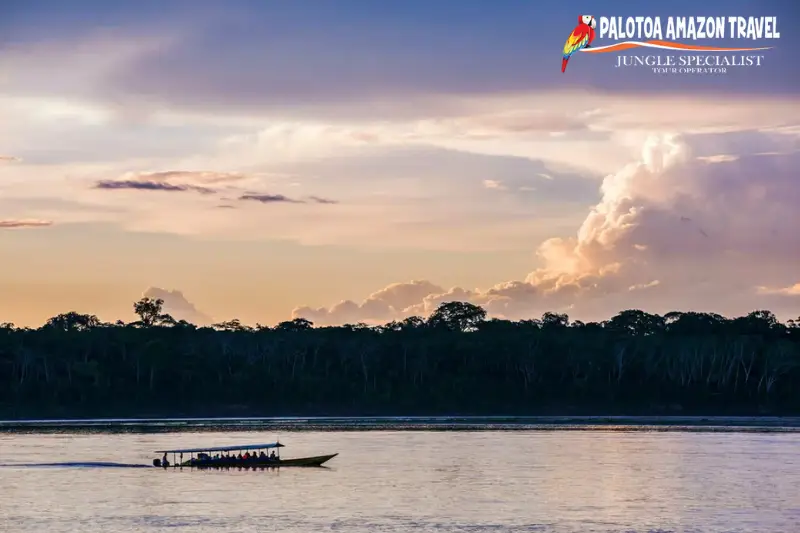
Second phase: the road ends. A motorized riverboat on the Alto Madre de Dios takes over. The river travel is the only way in and the time on the water is where the transition from Andean visitor to jungle traveler actually happens.
Packing for this environment:
Where you sleep has direct consequences for the forest. Matsigenka-owned lodges put revenue directly into community programs. Anti-poaching patrols. Local education. Economic structures that make the standing forest worth more than cleared land. Sustainable tourism at this level is not a marketing category. It is a functional reason for the ecosystem to remain intact.
Tours in Tambopata offer a related model for travelers whose itinerary runs through the southern Amazon corridor rather than Manu. Tambopata lodges, particularly those with Ese Eja community involvement, operate on similar community-based frameworks. The wildlife density is different from Manu but the ethical structure of the stay parallels it closely.
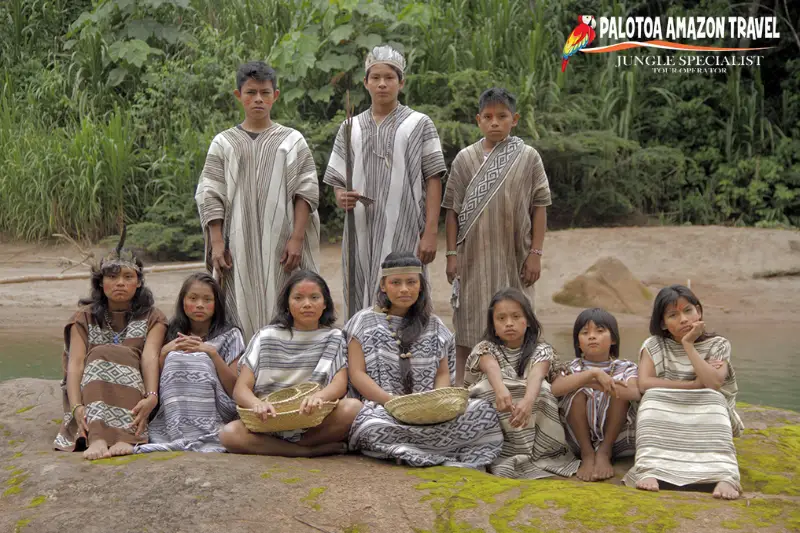
The Matsigenka have generational ecological knowledge that outside guides do not replicate. Animal movement patterns, plant relationships, forest reading skills developed over centuries of continuous presence. Staying in their facilities is access to that knowledge in a direct way that no external operator provides.
Some lodges include amazon rainforest art activities as part of the program. Natural dye painting, seed jewelry workshops, plant identification sessions connected to medicinal use. These are knowledge transfer, not tourist entertainment.
Leave No Trace protocols apply strictly here. Nothing removed from the forest. No wildlife contact. No waste on trails. The ecosystem does not accommodate casual visitors. It accommodates people who treat the access as a responsibility.
Five-day structure for amazon rainforest activities in Manu:
Days 3 and 4 carry the highest concentration of wildlife encounters. The lodge nights provide the context that connects individual sightings to the broader ecosystem pattern.
All deep access amazon tours require licensed local guides. Legal requirement and practical necessity. The forest without a guide who knows it is a navigation problem. With the right guide, the same forest becomes completely readable.
Time and budget decide it. Cultural Zone fits 3 to 4 days at lower cost. Reserved Zone needs 5 to 8 days and significantly more investment. Jaguar and giant river otter probability is substantially higher in the Reserved Zone. Authorized guides required for both.
A mineral-rich clay bank where macaws and parrots eat soil to neutralize food toxins. Dawn visits only, pre-sunrise departure required. August through October peaks bird activity when low river levels expose more clay surface.
Paddle-powered catamarans approach silently on still lagoons. Giant river otters, amazon caiman search, and riverbank birds are primary targets. Silence and stillness from all passengers required for productive encounters.
Nocturnal wildlife revealed by headlamp. Night monkeys, tree frogs, ground-level reptiles. Thick rubber boots mandatory, strict footprint discipline required, no surface contact on the trail.
Revenue funds indigenous community programs and anti-poaching operations directly. Guide knowledge is generational and irreplaceable. Some lodges include amazon rainforest art activities connecting cultural practice to conservation. Tours in Tambopata offer a comparable model for the southern Amazon corridor.

