


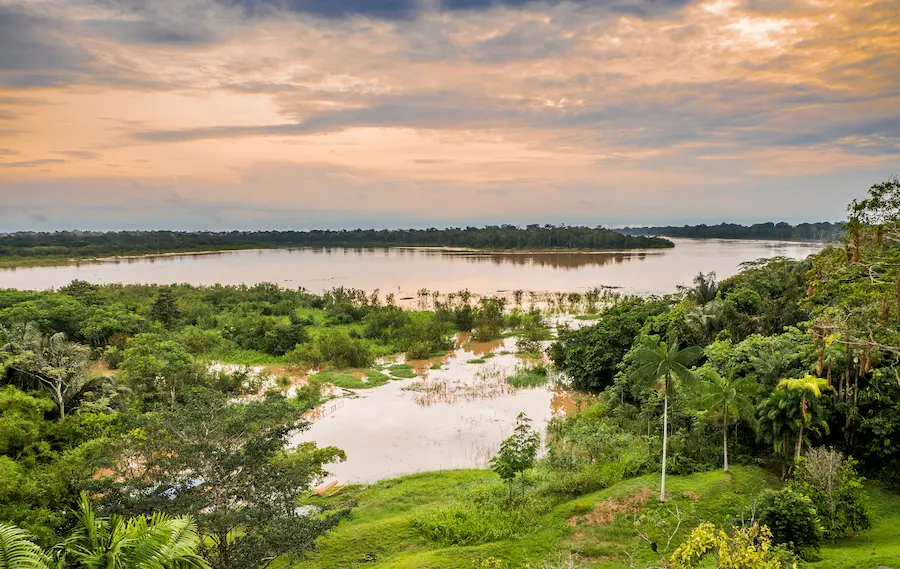
Amazonian myths are more than stories about mysterious creatures hiding among the trees or spirits wandering along the rivers. Across the Amazon, oral traditions have been used for generations to explain the natural world, express cultural beliefs and pass down ideas about how people should relate to forests, rivers and the beings that inhabit them.
In the Peruvian Amazon, many of these stories are connected to the landscape itself. Rivers, lagoons, enormous trees, animals and unexplored areas of the jungle all appear in traditional narratives. Some stories describe protective spirits, while others warn people about getting lost, disrespecting nature or venturing too far into places they do not understand.
What makes these stories particularly interesting is that there is not always one single version. The details can change between communities and regions, while the central character or idea remains recognizable. This is one of the characteristics that makes Amazonian folklore such a fascinating part of the cultural experience of traveling through the jungle.
From the mysterious Chullachaqui to the enormous Yacumama, here are 10 Amazonian myths that continue to form part of the region’s rich oral tradition.
You might be interested in reading: Could Jungle Trekking Be Your Next Adventure in Peru?
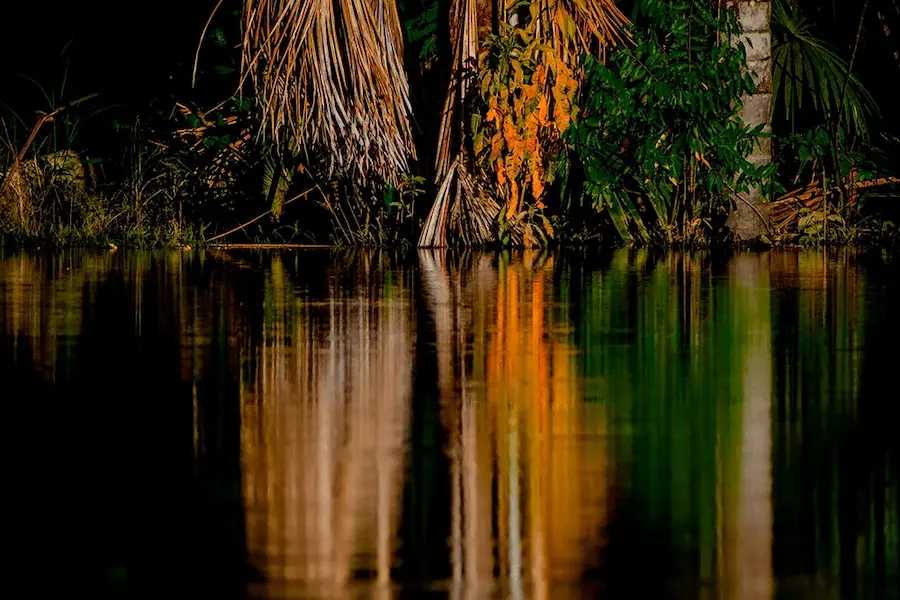
Amazonian Myths Are Closely Connected to Nature
Many Amazonian myths are inseparable from the environment where they originated. Rivers, forests and animals are not simply scenery in these stories; they often become characters themselves or represent powerful forces that deserve respect.
Stories shaped by the jungle
For communities that have lived for generations surrounded by dense forests and waterways, the natural environment has always played an important role in daily life. Traditional stories helped give meaning to places that could be difficult to understand or dangerous to navigate.
A river could become the home of a supernatural being, while an apparently ordinary path through the forest could be associated with a protective or mischievous spirit. In this way, mythology became closely connected to the landscapes people knew every day.
More than stories about mysterious creatures
It is easy to focus on the most frightening characters, but these traditions often communicate something deeper. Some myths are associated with respect for nature, others with caution, and others with the relationship between people and the supernatural world.
Peruvian cultural sources describe Amazonian legends as part of an oral tradition that has helped communities interpret their surroundings and transmit beliefs across generations.
You might be interested in reading: What Should Travelers Know About Amazonian Shamans?
10 Amazonian Myths You May Hear About in the Peruvian Jungle
The following stories represent some of the best-known figures associated with Amazonian folklore. Their descriptions and meanings can vary depending on the tradition or community where the story is told.
1. Chullachaqui, the Mysterious Forest Guardian
The Chullachaqui is one of the most recognizable figures in the folklore of the Peruvian Amazon. The name is associated with the idea of a person with an uneven or different foot, which is also one of the details traditionally used to recognize the creature.
According to popular versions of the story, the Chullachaqui can appear in the form of someone familiar and lead people away from the path. Other traditions describe the figure as a guardian of the forest. These different interpretations give the character an interesting dual nature: mysterious, potentially dangerous and closely connected to the jungle.
2. Yacumama, the Mother of the Waters
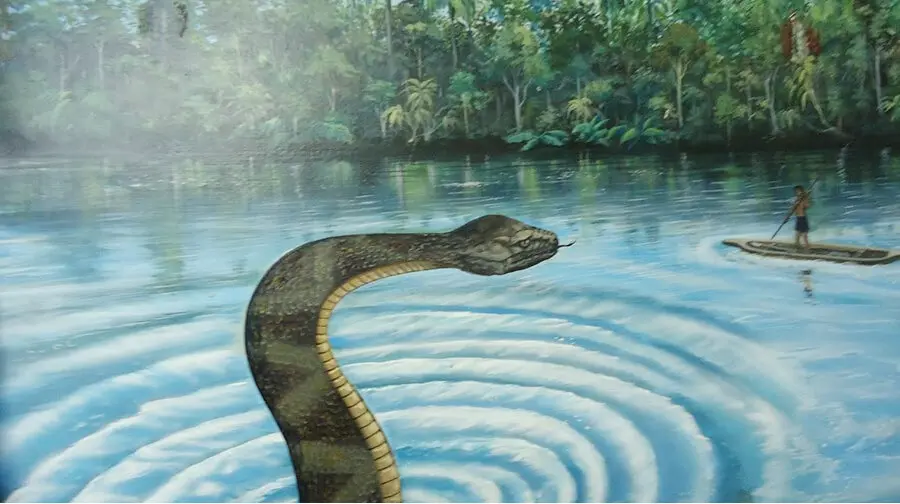
Yacumama is traditionally associated with the rivers and waters of the Amazon. Her name is commonly interpreted from Quechua as “mother of the water” or “mother of the river.”
Stories describe her as a gigantic serpent or supernatural aquatic being. In some traditions, she is connected to the protection of rivers and the creatures that live in them. The myth therefore reflects the importance of water in Amazonian life and the respect traditionally given to rivers.
3. Sachamama, the Mother of the Forest
While Yacumama is associated with water, Sachamama is traditionally connected with the forest and vegetation.
Some versions describe Sachamama as an enormous serpent associated with the world of plants and the forest. The relationship between Sachamama and Yacumama appears in traditional accounts that symbolically connect the forest and its waters.
This connection is particularly interesting because it reflects two fundamental elements of Amazonian landscapes: the immense forest and the rivers that run through it.
4. The Tunche, the Spirit of the Jungle
Few Amazonian stories are as mysterious as those surrounding the Tunche. In Peruvian folklore, the Tunche is commonly described as a wandering spirit associated with the forest.
Stories about the Tunche often focus on its presence being sensed before it is seen. Some versions describe a strange whistle or sound moving through the darkness, creating an atmosphere of uncertainty for anyone traveling through the jungle at night.
The figure has become one of the best-known supernatural characters in Peruvian Amazonian folklore and appears in collections of traditional stories about the region.
5. Yacuruna, the Guardian of the Rivers
The Yacuruna is another mythical figure connected to the waters of the Amazon.
Traditional accounts describe Yacuruna as a supernatural being associated with rivers and aquatic creatures. In some versions, the character is portrayed as a guardian of the animals that live in the water.
The story reinforces a recurring theme in Amazonian mythology: rivers are not simply geographic features but spaces with their own spiritual significance.
6. Ayaymama and the Mysterious Cry in the Forest
The Ayaymama is one of the Amazonian legends associated with birds and their haunting calls.
The story has been passed down in different versions, and the Ayaymama is commonly connected with a bird whose cry sounds like the name itself. The legend gives a supernatural explanation to a sound that can be heard in the forest and transforms an ordinary encounter with wildlife into something much more mysterious.
The Ayaymama continues to appear in collections of Amazonian stories and cultural materials about the mythology of the Peruvian jungle.
7. The Yaras, the Sirens of the Jungle
The Yaras are traditionally described as mysterious female beings associated with rivers and waterways.
Some versions portray them as Amazonian sirens that appear near the water. Their stories connect beauty, mystery and the powerful presence of rivers within Amazonian folklore.
The Yaras are included among the popular legends of the Peruvian jungle, alongside figures such as Yacumama, Chullachaqui and Yacuruna.
8. The Sacharuna, Spirit of the Forest
The Sacharuna is another figure associated with the forest and the supernatural world.
Traditional interpretations connect the name with the forest or “monte,” while stories portray the character as a powerful being of the jungle. Like several other Amazonian figures, the Sacharuna is linked to the relationship between humans and the natural environment.
The character is also sometimes associated with the idea of the “father of the forest,” emphasizing the belief that the jungle possesses its own spiritual presence.
9. The Ishingos, Little Spirits of the Forest
The Ishingos appear in collections of traditional stories as small supernatural beings associated with the jungle.
Unlike some of the enormous or frightening creatures found in Amazonian mythology, these figures belong to a different type of folklore involving small spirits and beings that inhabit the forest.
Their inclusion in collections of Peruvian Amazonian legends shows how diverse these traditions are. Not every myth revolves around a giant serpent or a terrifying apparition; many involve smaller supernatural characters that are part of the everyday imagination of the jungle.
10. The Ghost Ship of the Amazon
Not every Amazonian myth involves a creature living in the forest. Some stories are connected to the rivers themselves and to mysterious objects that appear on the water.
The legend of the ghost ship is one example. Included among collections of popular stories from the Peruvian Amazon, it adds another dimension to the region’s folklore: the river becomes a setting for stories about mysterious journeys, unexplained appearances and encounters after dark.
You might be interested in reading: The Most Fascinating Amazonian Food Traditions
What These Amazonian Myths Tell Us About the Jungle
Looking at these stories together reveals something interesting. Many of them are connected to places that are essential to life in the Amazon: rivers, forests, animals and paths through the jungle.
Rivers have a special place in Amazonian folklore
Yacumama, Yacuruna and the Yaras are all associated with water in different ways. Their stories reflect the importance of rivers as places of transportation, food, work and everyday life.
The river is therefore more than a backdrop. In traditional narratives, it can become a living part of the story, capable of protecting, frightening or hiding mysterious beings.
The forest is treated as a world of its own
Characters such as Chullachaqui, Sachamama and Sacharuna reinforce another recurring idea: the forest is a place that deserves respect.
These stories can be interpreted as cultural expressions of the relationship between people and their environment. They also provide warnings about becoming lost, entering unfamiliar areas or treating the natural world without caution.
Animals become part of the storytelling
Birds, snakes and aquatic creatures appear repeatedly throughout Amazonian mythology. The Ayaymama, for example, connects a bird’s call with a traditional story, while Yacumama and Yacuruna associate supernatural beings with aquatic life.
This close relationship between animals and folklore makes Amazonian mythology particularly interesting for travelers who want to understand the cultural side of the jungle, beyond its biodiversity.
You might be interested in reading: Rivers in Peru That Flow Through the Amazon
Why Amazonian Myths Are Still Part of the Travel Experience
For visitors, hearing one of these stories while traveling through the jungle can completely change the way a landscape feels.
A quiet river is no longer simply a river. A strange sound in the trees becomes part of a story. An enormous tree can remind you of a traditional character. Even a nighttime walk can feel different after learning about the beliefs associated with the forest.
Oral traditions keep these stories alive
Many Amazonian stories were transmitted orally rather than through written books. This means that versions can differ from one place or community to another.
Rather than looking for one definitive version of every myth, it is more useful to understand them as living traditions that have changed and adapted over time.
Myths offer another way to understand the Amazon
Wildlife, landscapes and adventure are major reasons people travel to the jungle, but culture adds another layer to the experience.
Learning about local legends can provide context for how different communities have interpreted the environment around them and how stories have helped preserve cultural knowledge across generations.
Frequently Asked Questions About Amazonian Myths
What are Amazonian myths?
Amazonian myths are traditional stories and beliefs associated with the peoples, landscapes and natural environments of the Amazon. Many involve supernatural beings connected to forests, rivers, animals and other elements of the natural world.
What is the most famous Amazonian myth?
The answer depends on the region and tradition, but figures such as the Chullachaqui and Yacumama are among the best-known characters associated with the folklore of the Peruvian Amazon.
Is the Chullachaqui a real creature?
The Chullachaqui belongs to Amazonian folklore and traditional oral storytelling. Accounts describe it as a supernatural forest figure, with different versions of the story existing across the region.
What is Yacumama?
Yacumama is a mythical being associated with Amazonian waters. Traditional accounts commonly portray her as a gigantic serpent or supernatural aquatic figure and connect her with the protection of rivers.
Why are there different versions of Amazonian myths?
Because many of these stories have been transmitted through oral traditions, their details can vary between communities and regions. Different versions can share the same central character while changing elements of the story, its meaning or its setting.
Are Amazonian myths part of Peruvian culture?
Yes. Amazonian myths and legends form part of the cultural traditions associated with the Peruvian Amazon. They have been collected and documented in Peruvian cultural and literary resources, including collections dedicated specifically to Amazonian folklore.
A Jungle Filled With Stories
The Amazon is often described through its wildlife, rivers and immense forests, but its cultural landscape is just as fascinating. Amazonian myths add another dimension to the experience, connecting the places travelers see with stories that have been passed from one generation to another.
From the Chullachaqui and Yacumama to the mysterious Tunche and the legends of the Yaras, these stories show how deeply the natural world is woven into Amazonian traditions. They are not simply tales about mysterious creatures; they are part of a much larger cultural imagination shaped by the forest, the rivers and the communities that have lived alongside them for generations.

[…] You might also be interested in reading: 10 Amazonian Myths That Bring the Jungle to Life […]