


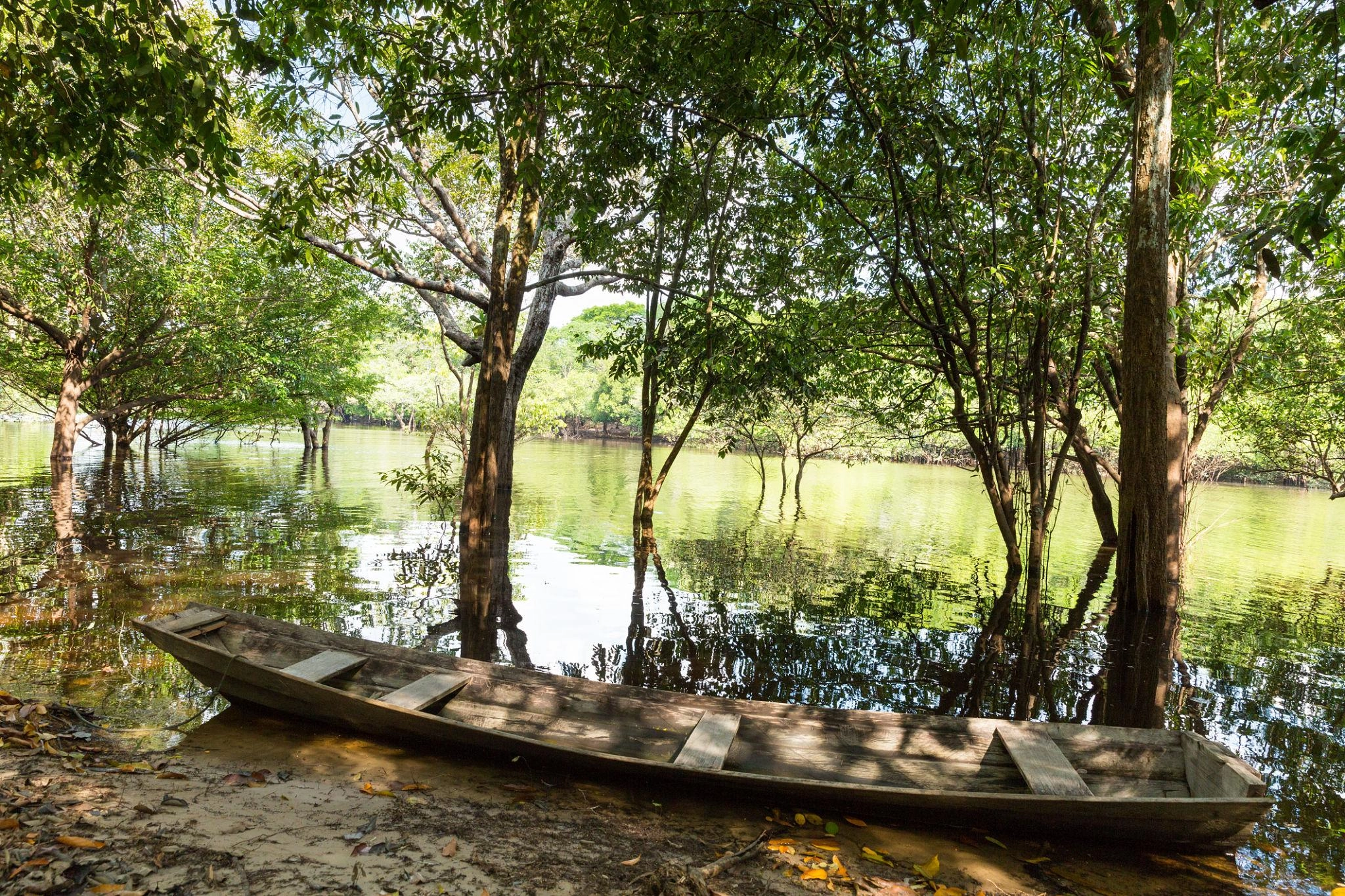
The Amazon flooded forest is a constantly changing ecosystem shaped by seasonal river pulses that transform vast areas of rainforest into interconnected waterways. This dynamic environment creates unique conditions where land and water merge, allowing a remarkable variety of wildlife to thrive. From tree-dwelling primates to fully aquatic mammals, the region offers one of the richest biodiversity experiences on the planet, making it a key destination for nature observation and ecological exploration.
Why the Amazon flooded forest is a unique wildlife habitat?
The Amazon forest is one of the most dynamic ecosystems in the world, shaped by seasonal river cycles that transform dry land into vast aquatic landscapes. During the rainy season, rivers such as the Amazon and its tributaries rise dramatically, submerging large areas of forest. As the water spreads, trees remain partially submerged, creating a unique environment where terrestrial and aquatic life coexist in constant adaptation.
One of the most fascinating aspects of the Amazon forest is how it changes throughout the year. In the dry season, animals move freely across forest floors, feeding on fruits, seeds, and vegetation. When the waters rise, many species adapt by climbing trees, swimming between canopies, or moving deeper into the forest. This constant transformation makes the ecosystem one of the richest biodiversity hotspots on the planet.
The Amazon flooded forest also plays a critical role in the survival of countless species because it offers:
- Seasonal feeding opportunities linked to fruiting trees
- Safe breeding grounds for fish and amphibians
- Protection from predators during high-water periods
- Access routes for aquatic and semi-aquatic animals
Because of these conditions, the Amazon forest becomes a temporary refuge and feeding paradise, attracting animals from across the rainforest. The interplay between water and forest creates an environment that is both fragile and incredibly productive.
Animals you can see in the Amazon flooded forest
The following species represent some of the most iconic wildlife adapted to life in the Amazon flooded forest, each one playing a unique role in the ecosystem. These animals have evolved special behaviors and physical adaptations that allow them to survive seasonal flooding, shifting water levels, and dense aquatic environments. From highly social mammals to specialized birds and reptiles, the biodiversity of the Amazon flooded forest reflects one of the most dynamic natural systems on Earth.
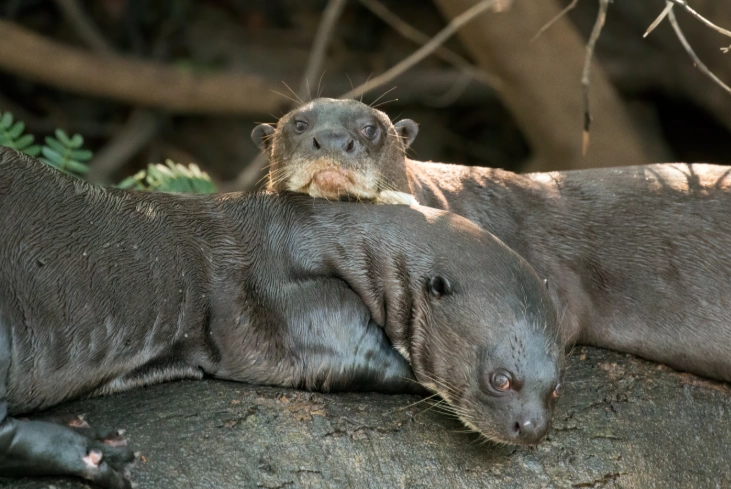
1. Giant River Otter in Amazon flooded forest
The Giant River Otter is one of the top predators in the waterways of the Amazon flooded forest. These highly social animals live in family groups and rely heavily on fish as their main food source. Their loud vocal communication and coordinated hunting strategies make them one of the most fascinating mammals in the region. They are also extremely territorial, often defending riverbanks and lagoons from intruders. They are usually active during the day, which makes them easier to observe while navigating rivers and lakes in the Amazon forest.
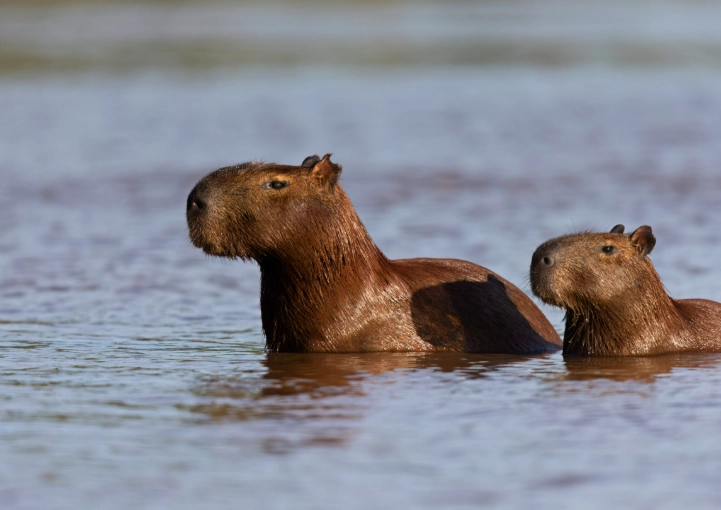
2. Capybara
The capybara, the largest rodent in the world, thrives in the Amazon flooded forest due to its semi-aquatic lifestyle. Capybaras spend much of their time near water, using rivers and lakes as protection from predators. They are calm, social animals that often travel in groups, grazing on grasses and aquatic plants along the flooded edges of the forest. They are also strong swimmers and can stay submerged for several minutes, which helps them avoid threats in the Amazon forest while moving between feeding areas.
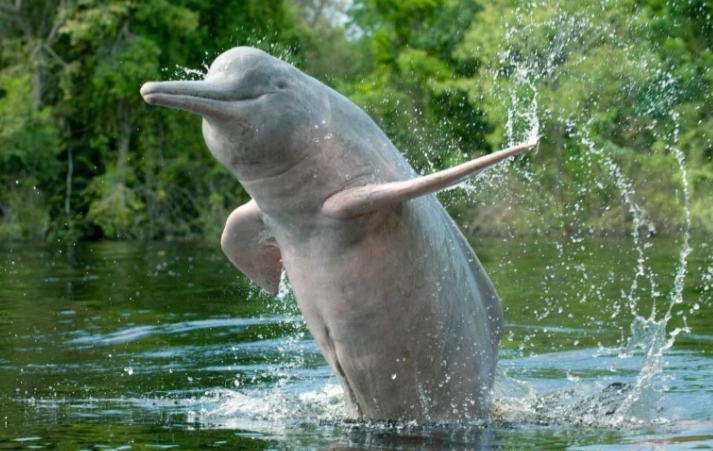
3. Pink River Dolphin
The Pink River Dolphin is one of the most iconic species found in the Amazon forest. Known for its intelligence and flexibility, this freshwater dolphin navigates submerged trees and narrow waterways with ease. Its pink coloration becomes more vivid with age, and it uses echolocation to hunt fish in murky waters. It is also highly adaptable, allowing it to move between flooded forest channels and main rivers even when visibility is very low in the Amazon forest.
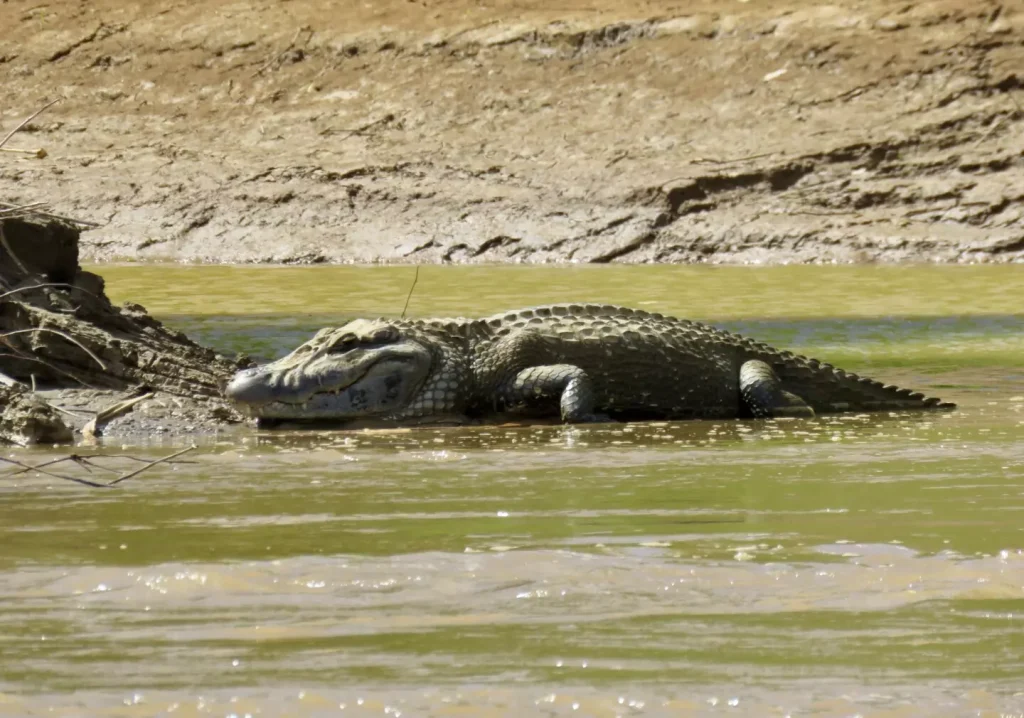
4. Black Caiman
The Black Caiman is the apex predator of the Amazon flooded forest, capable of reaching impressive sizes. It plays a crucial role in controlling fish and mammal populations within the ecosystem. During the high-water season, it moves into flooded areas to hunt, making use of its stealth and powerful jaws. It is often found resting near riverbanks or partially submerged logs in the Amazon forest, where it waits silently for passing prey.
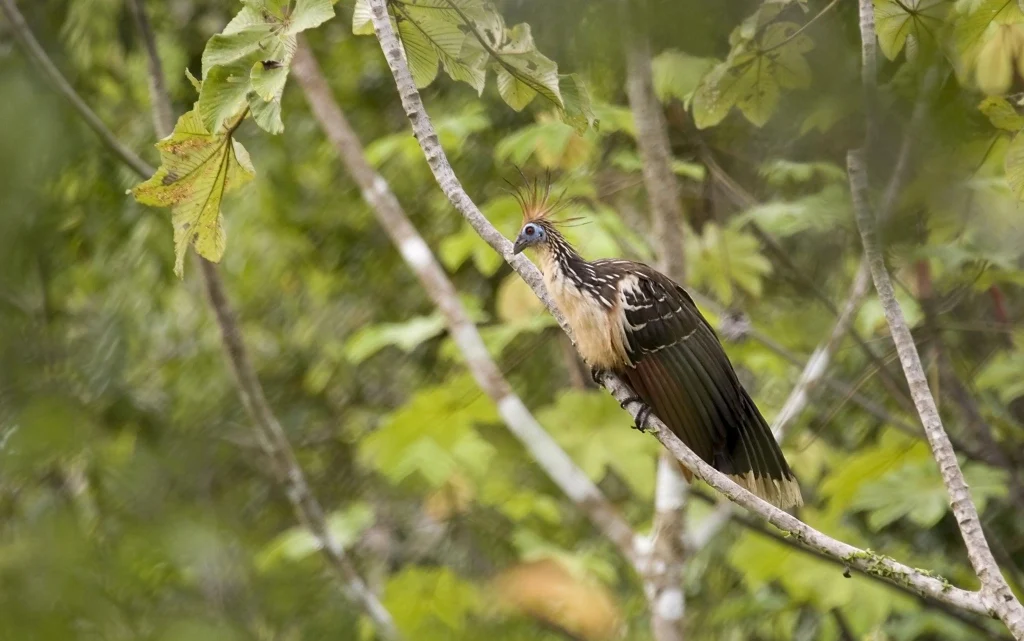
5. Hoatzin in Amazon flooded forest
The Hoatzin is a unique bird often seen perched above waterways in the Amazon flooded forest. Sometimes called the “stinkbird” due to its fermentation-based digestion, it feeds primarily on leaves. Young Hoatzins even have claw-like structures on their wings, helping them climb through vegetation before they can fly. It is usually found in small groups along riverbanks and flooded vegetation in the Amazon forest, where it moves slowly compared to other birds in the area.
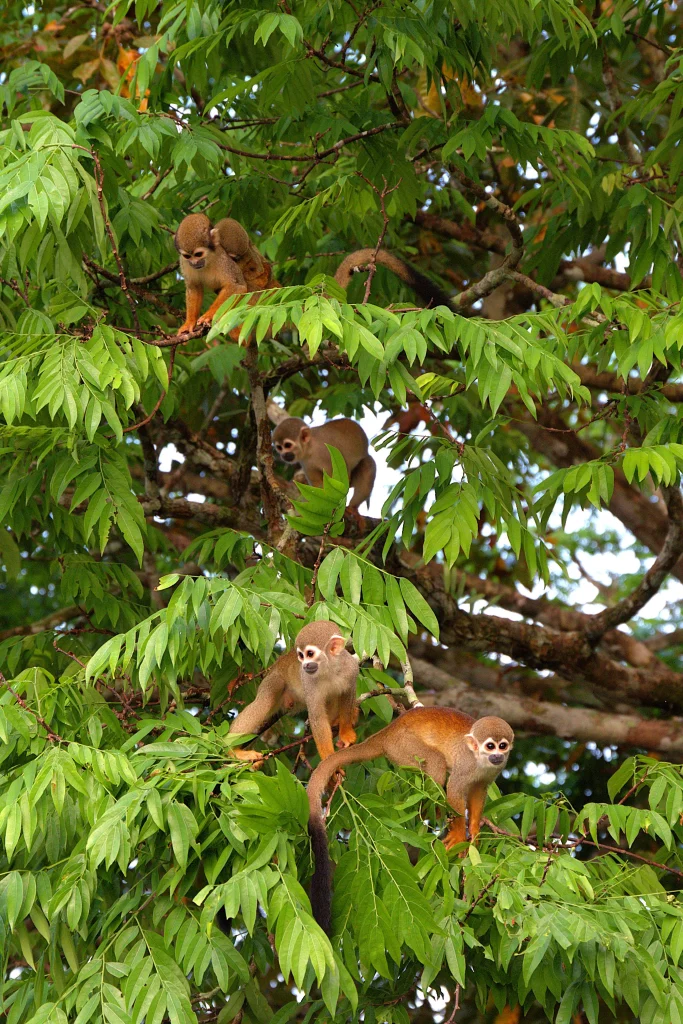
6. Squirrel Monkey
Squirrel monkeys are highly agile primates that thrive in the canopy of the Amazon flooded forest. They move quickly through trees, feeding on fruits, insects, and small vertebrates. Their social behavior and constant movement make them one of the most active and visible species in the region. They often travel in large troops, using the upper layers of the Amazon forest to stay safe from ground and aquatic predators while foraging efficiently.
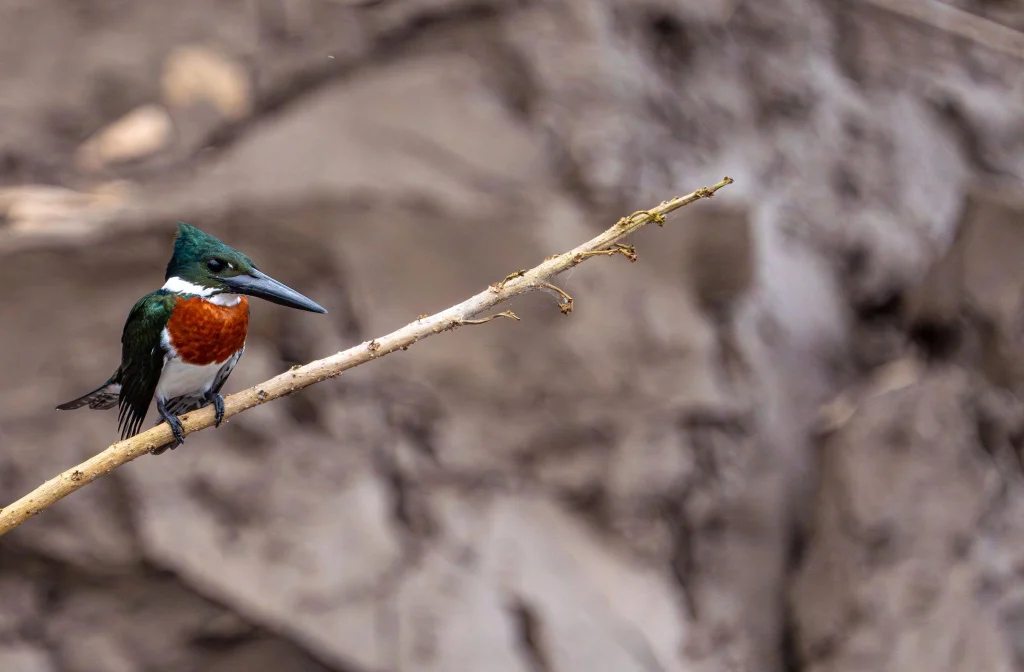
7. Amazon Kingfisher
The Amazon Kingfisher is a striking bird often spotted near rivers and flooded areas of the Amazon flooded forest. It hunts by diving into water to catch fish, relying on precision and speed. Its vibrant plumage makes it easy to identify among dense vegetation and reflective water surfaces. It usually perches on low branches above water in the Amazon forest, waiting patiently before diving to catch its prey.
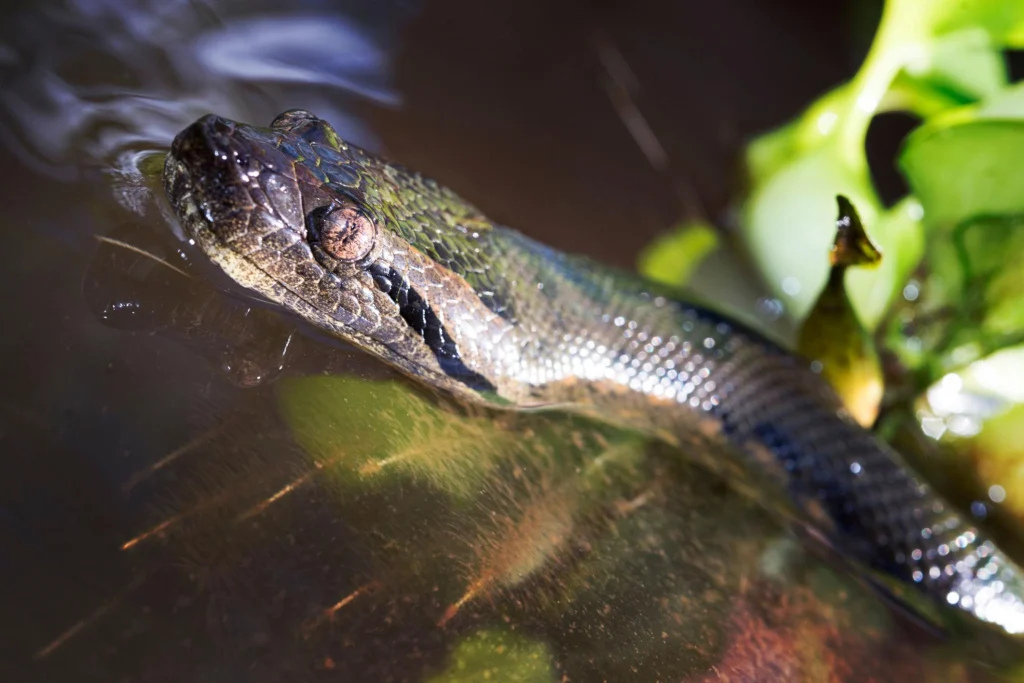
8. Green Anaconda
The Green Anaconda is one of the most powerful reptiles in the Amazon flooded forest. It thrives in slow-moving waters, where it can ambush prey such as fish, birds, and even mammals. Despite its size, it is an expert swimmer and plays an important role in maintaining ecological balance. It is often found coiled in shallow, vegetated waters within the Amazon forest, where it blends easily with its surroundings while waiting for prey.
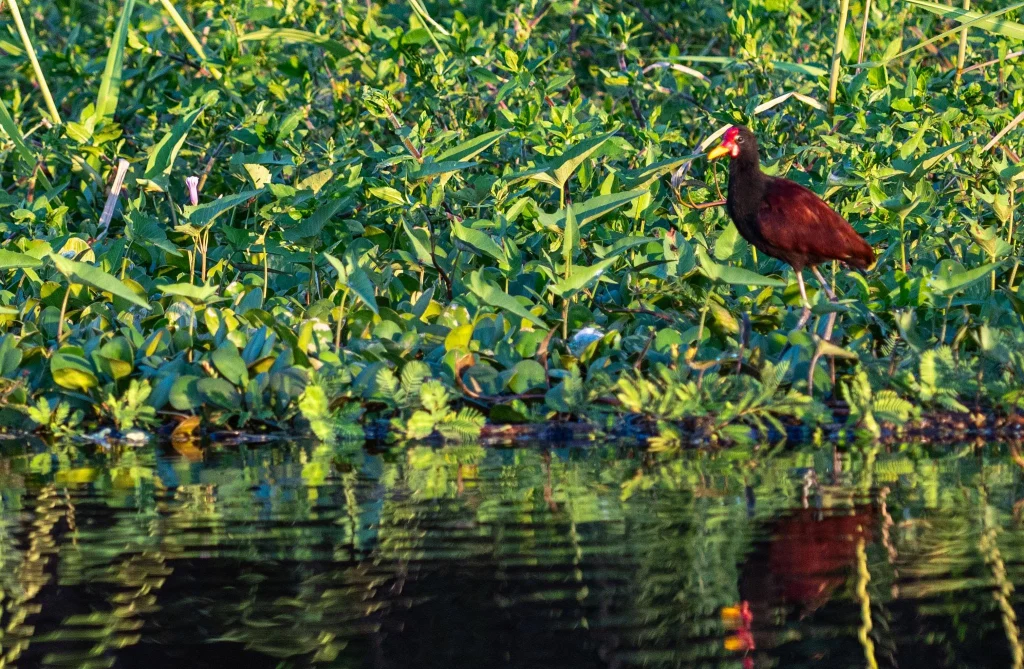
9. Wattled Jacana
The Wattled Jacana is a distinctive bird known for walking on floating vegetation in the Amazon flooded forest. Its long toes distribute weight evenly, allowing it to move across lily pads without sinking. Males are responsible for incubating eggs and caring for chicks, a rare role reversal in the bird world. It is commonly seen moving across calm, shallow waters in the Amazon flooded forest, where floating plants provide both food access and protection from predators.
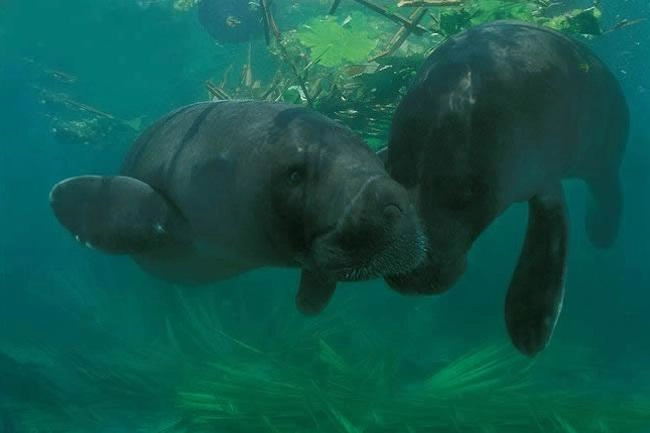
10. Amazonian Manatee
The Amazonian Manatee is a gentle herbivore that inhabits the calm waters of the Amazon flooded forest. It feeds on aquatic plants and spends most of its time submerged. Due to its slow reproductive rate and habitat loss, it is considered a vulnerable species and is carefully protected in many regions. It is usually found in slow-moving channels and flooded lakes of the Amazon flooded forest, where it relies on dense vegetation for both food and shelter.
When is the best time to visit the Amazon flooded forest?
The best time to explore the Amazon flooded forest depends on what kind of experience you want. The ecosystem shifts dramatically between the dry and rainy seasons, offering different wildlife viewing opportunities.
During the rainy season, river levels rise significantly, flooding large sections of the forest. This is the ideal time for boat exploration, as waterways expand and allow deeper access into remote areas. Many animals are easier to spot during this period because they concentrate around trees and elevated areas.
In contrast, the dry season reveals more land-based trails and concentrated river channels. Wildlife is still abundant, but animals may be easier to observe along shrinking water sources.
Key seasonal highlights include:
- High-water season: best for canoe and boat navigation
- Low-water season: better for hiking and forest trails
- Transitional months: ideal balance of accessibility and wildlife diversity
Understanding these cycles helps visitors maximize their chances of experiencing the full diversity of the Amazon flooded forest. Many travelers combine this experience with Tambopata tours to explore additional rainforest habitats and observe a wider variety of Amazonian wildlife.
How to explore the Amazon flooded forest safely and responsibly
Visiting the Amazon flooded forest requires preparation and respect for its fragile ecosystem. Because conditions change with water levels and weather, safety and sustainability should always be priorities.
To ensure a responsible visit, consider the following guidelines:
- Travel with certified local guides who understand river conditions
- Avoid disturbing wildlife or attempting to feed animals
- Use quiet movement when navigating by boat to reduce stress on animals
- Follow marked routes and avoid entering restricted conservation zones
- Carry appropriate gear such as waterproof clothing and insect protection
It is also important to minimize environmental impact. Visitors should avoid leaving waste behind, use reusable containers, and respect local conservation rules. The Amazon flooded forest is highly sensitive, and even small disruptions can affect wildlife behavior and habitat stability. Choosing eco-friendly operators, including those offering a Sandoval Lake Tour, helps support conservation efforts and local communities who depend on the forest for sustainable tourism and research.
Visitors should also avoid loud noises and unnecessary interaction with wildlife, as this can disturb natural behaviors and feeding patterns in the Amazon flooded forest. Respecting distance guidelines and following the instructions of local guides ensures both safety and long-term ecosystem protection.

