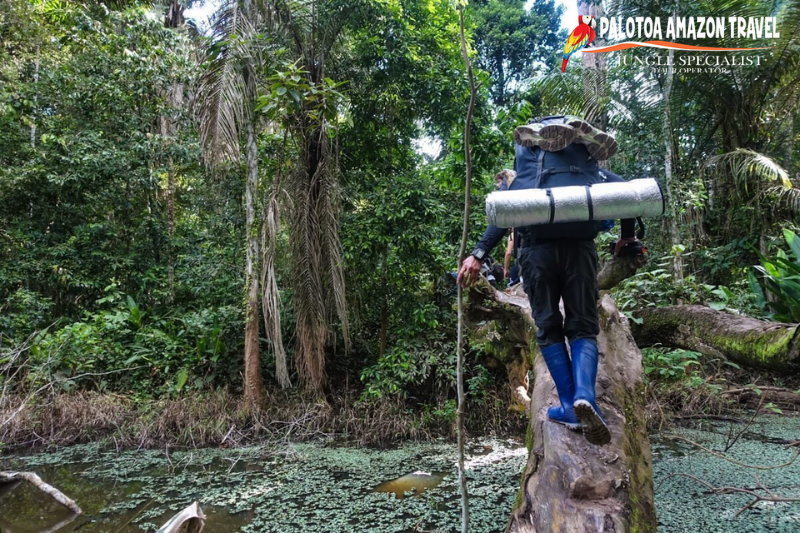
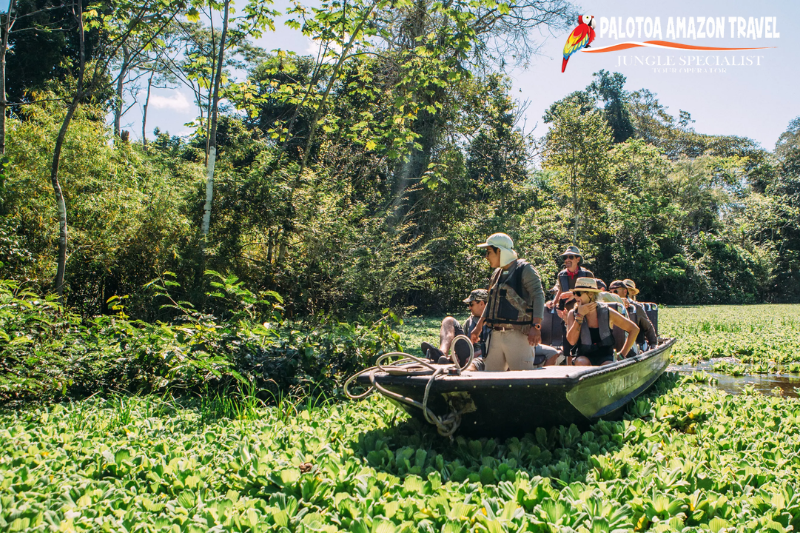
You must have watched the films when an enormous snake flies down the trees, or a jaguar preys upon the camp turning the rainforest into an unavoidable death trap. But to pose the question whether one can safely sleep in the Amazon jungle is to enter a not so cinematic but also more mundane world of logistics. If you spent a night under the trees, your biggest adversary wouldn’t be an anaconda, but rather the microscopic threats of insects or the overwhelming humidity that keeps everything perpetually damp.
This approach to dealing with these conditions has been called “Managed Risk” by ecologists and long-time explorers.
This framework shifts your focus from a paralyzing fear of predators to the practical management of your immediate environment. Rather than relying on luck or physical strength, safety depends on respecting the difference between the perceived dangers shown in Hollywood and the actual risks—like keeping your boots dry or shaking out your bedding—that truly dictate your well-being.
Although the idea of rampaging wildlife dominates the mind, the actual fears of the traveler are exposure and small infections as the amazon travel safety statistics show. Experts on the wilderness often state that the jungle is neither good nor bad, but the jungle does have a schedule and human beings are just visitors. Knowledge of this rhythm transforms a scaring night of exposure into one that is quite manageable and awe-inspiring.

To make it through successfully in the night, it is necessary to use what professionals refer to as Survival Triad: appropriate equipment, a professional guide, and the right behavior. These were the basic jungle survival skills and when you learn them, you will be not only surviving the darkness, but also safely in the midst of the most biodiverse on earth.
Movies often portray the jungle night as a gauntlet where jaguars and other nocturnal wildlife threats actively track human prey. In reality, most wildlife adheres to strict “office hours” focused entirely on efficiency and self-preservation.
Apex predators typically perceive humans as puzzling, noisy, and even dangerous creatures that do not qualify as food. They are risk-averse predators; they usually do not want to risk hunting an unfamiliar and tall animal and would rather stroll in the undergrowth without notice.
On the forest floor, the avoidance behavior changes to the defense behavior against the venomous snakes and spiders in the Amazon. These animals are not lying idly around to attack campers; they are merely lying in an attempt to save on energy and remain covert. Most bites happen not in aggression, but in case a person gets into the personal space of the animal. The pit viper only strikes when he thinks he is in danger, in most cases a boot has fallen within inches of his head or a hand has grabbed a branch without even looking.
Survival in this case is not more about bravery and more about mere situational awareness. Looking directly at the question and wondering, are jaguars a threat to campers? No–in general, until you get one isolated. The actual plan is never get your hands or feet in the same spot when you have not looked at your feet or hands the first. With a headlamp and by following your step, you can respect the territory of the wildlife, transforming a possible emergency into a harmless sightseeing.
As soon as you understand that the big animals are not chasing you, the adrenaline slows down and you can see the more ubiquitous reality of the place that pays a heavy price. It is not a question of avoiding the fangs but of enduring the depressing air which hangs all round you all day and night.
As you are busy scanning trees in search of big cats, the air itself is working against you quietly. Imagine walking into a bathroom immediately after someone had taken a hot shower and had shut down the door and remained there. This is what it’s like to be in the Amazon in terms of humidity and heat exhaustion. The moisture is so heavy in the air–almost 90 percent of it–that the sweat rather than evaporating to cool you down, drips.
This permanent dampness hosts a heaven on earth for the real players of the jungle: the insects. Although tourists worry about anacondas, seasoned guides know that avoiding mosquito bites in the tropics is a far more important survival skill. The dangers in this case are thumbnails or microscopic. A single mosquito will have the capacity to carry disease and a disturbed leaf may harbor poison frogs or vicious bullet ants. A simple inconvenience in such a setting might result in a healthcare crisis when left unaddressed.
Not only the bugs, the damp climate attacks the defenses of the body. Since nothing ever really dries up, the scratches that are so minor end up infecting a few hours, and the way to prevent tropical disease and parasites is where your feet are concerned. Jungle rot is a severe fungus that grows in wet footwear. Stuffing two clean socks in a plastic bag is not an extravagance, it is the only means of being able to leave the forest on your own two feet.
You need to add a stern morning routine before even the coffee cup to get along with these micro-threats:
These small habits are very simple to master and this is the difference between a miserable endurance test and an incredible adventure. Nevertheless, none of the boot-shaking of the world will be of any help, when your sleeping gear, in fact, welcomes the moisture inside. Regular camping gear will fall short in this matter and mostly because of airflow.

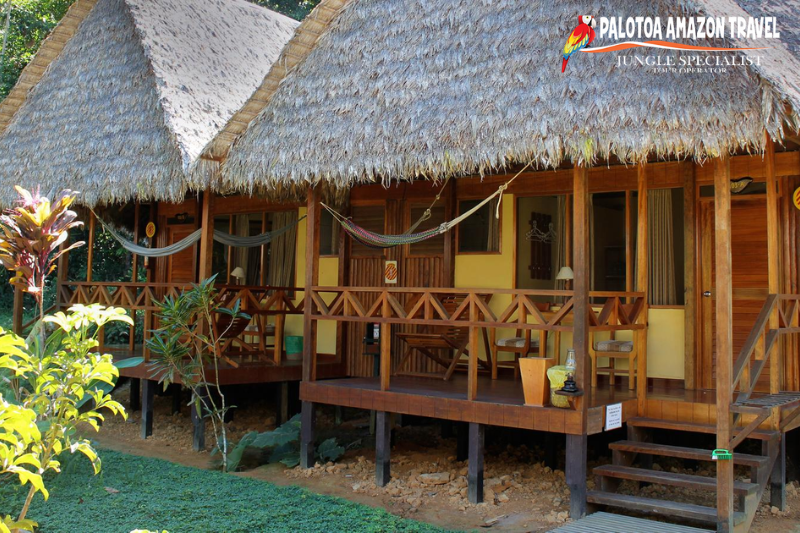
Pitching a standard tent on the jungle floor is essentially volunteering to sleep in a puddling greenhouse. Unlike the controlled environment of Amazon eco-lodges vs wild camping—where sturdy platforms keep you dry—the forest floor is a sponge that never fully wrings out. In a tent, the lack of airflow turns your body heat into condensation, soaking your gear from the inside out while termites and soldier ants test the floor fabric from below.
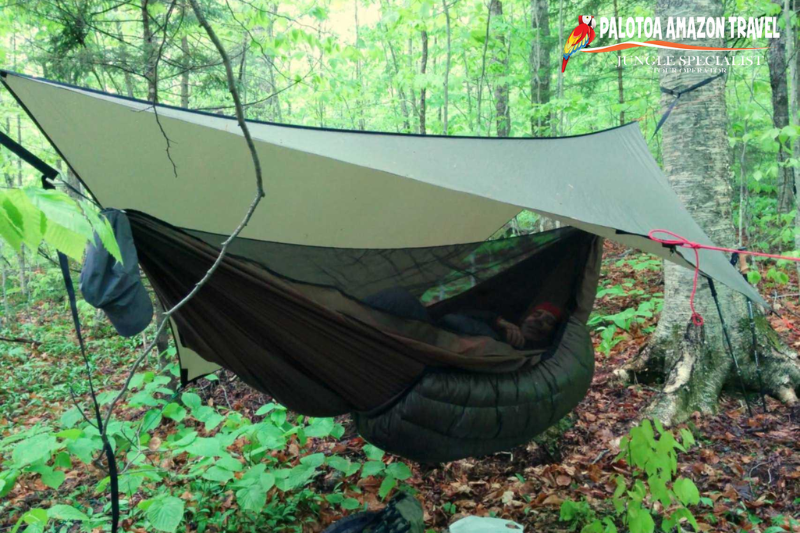
Elevation works in such situations where the ground is “alive”, that is why sleeping in the jungles under mosquito netting is the ultimate survival weapon in tropics. Contemporary hammocks of survival fall into the asymmetrical category; that is, you lie across the mid line diagonally. This creates a flatten out look on the fabric to make you sleep level instead of curving like a banana to avoid back pains and ensuring your shoulders are not squeezed together. Better still, the suspension system transforms the continual breeze of the jungle into a natural air-conditioning system, and purges the dampness that would otherwise be stifling in a tent.
However, suspension physics introduces two counter-intuitive problems: Cold Butt Syndrome (CBS) and wicking water. The breeze under your body can be inspiring body heat even in the tropics at 3:00 AM, and a light under-quilt or pad is essential. Just as in a severe rain, the rain will fall down along the tree, and in your suspension belt and right into your dry bed.A drip line fixes this issue—a simple piece of string tied to the suspension webbing that diverts water before it reaches the hammock body.
To sleep effectively off the ground, beginner adventurers need jungle survival gear with these non-negotiable features:
But having the most advanced aerospace-grade hammock means nothing if you tie it to a “widow-maker” or a tree housing a colony of bullet ants. This is where gear ends and ancestral knowledge begins.
While your hammock protects you from the ground, only a trained eye can protect you from the environment itself. High-tech GPS units and waterproof maps are useless against the Amazon’s most effective weapon: camouflage. It is in this place that Indigenous Ecological Knowledge (IEK) comes in as the primary life support system. Local guides already have a cognitive map of the forest, which works out there, faster than any application, of detecting the change in texture of a viper covered in leaf litter, or the distinct hum of a wasp nest, long before a tourist would bump into it.
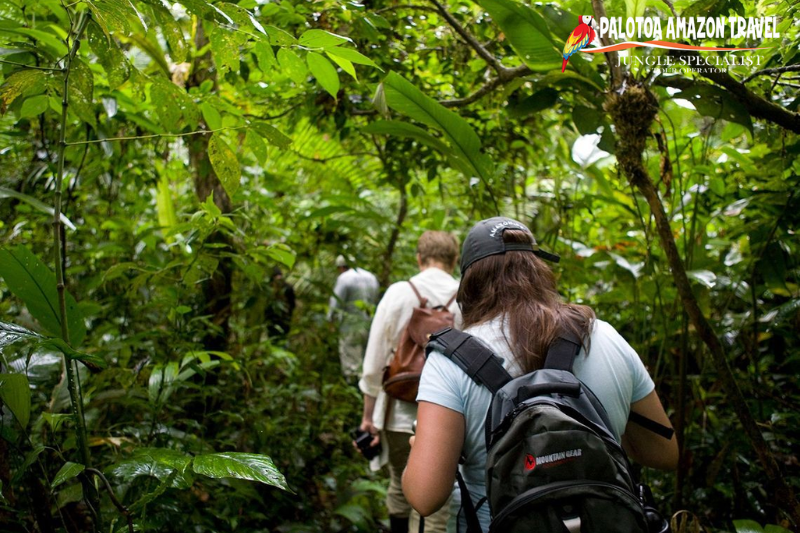
These methods of surviving in the jungle take decades of practice in these techniques and not a weekend crash course. A native guide does not simply point at a tree, he will read the history of its life, so that it is not unsteady on your hammocks, and hasn’t symbiotic ants that tumble down out of the tree-top and land on your back. Such situational awareness will transform a frightening, disorganized green wall into a grid, upon which you may rest, and leave the perimeter security in the hands of a more competent person.
In addition to the ability to identify potential threats without seeing them, Amazon travel safety logistics is based on an understanding of the liquid highways of the basin. When heavy rains swell the creek into an impassable torrent, a local expert knows the hidden ridgeline route that does not appear on standard topographic maps. By hiring professional Indigenous guides, you gain more than a cultural exchange—you secure a vital safety resource. They lead your trek in the amazon with deep knowledge of the terrain and follow established emergency protocols, whether that means coordinating a boat relay or using radio contact with nearby settlements for extraction.

Since the threat of the outside is dealt with by the careful watch of your guide, you must now center your attention on the internal threats that cannot be prevented even by the most perimeter protection. The dry climate leaves you with insatiable thirst but the crystal clear stream passing next to your camp is withering with microscopic life waiting for a host.
The Amazon Basin contains almost quarter of all fresh water in the earth which makes irony mean heartbreak regarding the fact that you are always wet and may not be hydrated. Beginner mountaineers tend to think that it is safe to drink all the runaway water of a crystal clear, fast flowing stream, but visual clarity is a trap to the tropics. Such a clean appearance regularly conceals covert biological threats and makes certain safe drinking water measures in the jungle an unavoidable priority over convenience.
The first challenge is sediment control because most rivers are occupied by silt, which forms a thick fluid that will be able to block the normal filters in a few seconds. To mitigate this, savvy travelers apply a two-step solution; they will first filter the liquid by wrapping it in a bandana to eliminate the muck, followed by pumping the liquid by pressing through a mechanical filter such as a Sawyer filter. By preventing the bacteria that you can not see, this physical barrier allows gritty soup to become a safe commodity.
Reliance on boiling water—standard survival advice elsewhere—often fails here simply because finding dry wood in a rainforest is an exhausting, calorie-burning endeavor. Instead, jungle survival gear for beginners should always include chemical purification tablets as a redundancy. Although these techniques may leave a slight chemical aftertaste, they still offer a far safer option than risking your digestive system in an environment where dehydration can set in quickly.
If you skip these precautions, you expose yourself to tropical diseases and parasites such as Giardiasis or Leptospirosis—a bacterial infection transmitted through animal urine that can cause severe flu-like symptoms. Nevertheless, one swallow of polluted river water can terminate a journey, and an emergency evacuation is necessary at the time when the weather changes. Knowledge of these microscopes’ dangers is most important, but you should also attentively wonder how the water, itself, can so easily change its physical state when the gateways of the heavens are opened.
Only because the sky over your hammock is blue does not mean that you are not in danger of the water. A storm several hundred miles away in the Andes can motor down a river and bring its waters overflowing upon you the whole night long. This is a silent hydrological flash-cycle, the possibility of flash-floods at amazonian campsites is also hardly forewarned by thunder, so you have to think of it as any riverbank, and not as a picturesque luxury.

Gravity is an additional menacing threat in the sky. Elevated humidity experienced during the trip of backpacking the amazon in the rainy season accelerates rotting in the canopy, resulting in thick dead branches which are referred to as widow-makers. The result of this is the hanging of large limbs that are close to snapping in the presence of gathered rain water or some form of a sudden wind action and instantly transforming a good shelter into a danger zone.
These particular tips concerning the amazon rainforest camping safety are the most important to remember to guarantee that you do not wake up in a different place than the one you fell asleep in:
Establishing a safe perimeter protects you from the physical elements, but the microscopic biological hazards that abound in the damp air are very little impeded by it. The next thing you have to do when you have your hammock fastened is to forget the trees you are under, and to concentrate on the invisible barriers that are running through your bloodstream.
While a sturdy hammock protects you from the ground, your immune system requires its own fortification before you ever board the plane. The “price of admission” for the jungle includes a specific regimen of essential vaccinations for amazon basin travel, acting as biological armor against invisible threats. Yellow Fever and Typhoid shots are non-negotiable prerequisites, transforming your body from a vulnerable host into a hardened fortress against these water-borne and mosquito-carried viruses.
Unfortunately, not all the threats can be suppressed once they receive a single injection. This is because there is no universally available vaccine against malaria and as such, travelers must rely on malaria prophylaxis, which is a daily or weekly pill regimen that will make your blood unfriendly to the malaria parasite. Do not think of these pills as a cure, but as a daily subscription to security whereby a bite by a mosquito does not turn into a medical emergency.
However, Leishmaniasis is a rather parasitic disease that cannot be prevented by pills. These insects are much smaller than the mosquitoes- they can be very tiny and fly right in through the ordinary mesh and their bite can cause serious skin lacerations that can take months to heal. Since there is no preventive barrier of this particular parasite made available by chemical medicine, the specific line of attack should be changed in your plan to include physical obstacles to the attacks of the parasite.
This is where the difference between the bug spray and the treated clothing is now very important concerning the prevention of tropical diseases and parasites. Whilst DEET helps to keep the uncovered skin at a distance of insects; the Permethrin clad garments do kill or immobilize the ticks and flies on the spot. Long sleeves sprayed with this chemical act as a second skin where even in case a sandfly sits on you; it will not last long to eat you. Having got your medical armor fastened on, you are at length in readiness to enter the damp bosom of the forest to its stalest test.

Asking if it is safe to sleep in the Amazon jungle is no longer about surviving a movie script, but about managing reality. The true challenges aren’t lurking jaguars, but rather the microscopic details of hydration, insect management, and humidity. By replacing panic with protocol, you have shifted from a vulnerable tourist to a capable participant ready to handle the environment’s rigorous demands.
Create a concrete pre-trip strategy by focusing on three non-negotiable pillars: audit your gear for tropical suitability, strictly vet professional guides who possess deep local knowledge, and verify your medical readiness with a travel health specialist. These amazon rainforest camping safety tips are not just suggestions; they are the essential infrastructure that keeps the wilderness an adventure rather than an ordeal.
Ultimately, achieving safety in the Amazon jungle is about trading fear for respect. With your layers of defense in place, the cacophony of the rainforest night ceases to be a warning siren and becomes a lullaby of biodiversity. You are ready to step into the treeline, knowing that the price of admission—the heat, the noise, and the preparation—is worth the wonder waiting in the dark.