Manu national park tours belong in a different category from most Amazon options in Peru. Over 1,000 bird species inside one protected territory, more than the US and Canada combined. Add giant otters, jaguars, and uncontacted indigenous communities and the UNESCO Biosphere Reserve designation here carries actual weight.
The park is divided into three zones. Outer Cultural Zone with open access, middle Reserved Zone requiring permits, and a permanently closed core. That zone decision before booking determines everything else about the trip. Understanding each zone is the first step toward planning national park tours that actually match what you’re looking for.

Manu doesn’t start in the jungle. From Cusco the road climbs over Andean passes before dropping steeply, 8 to 10 hours total before reaching the river ports. Cold mountain terrain, cloud forest, and humid lowland jungle pass by in a single day of travel.
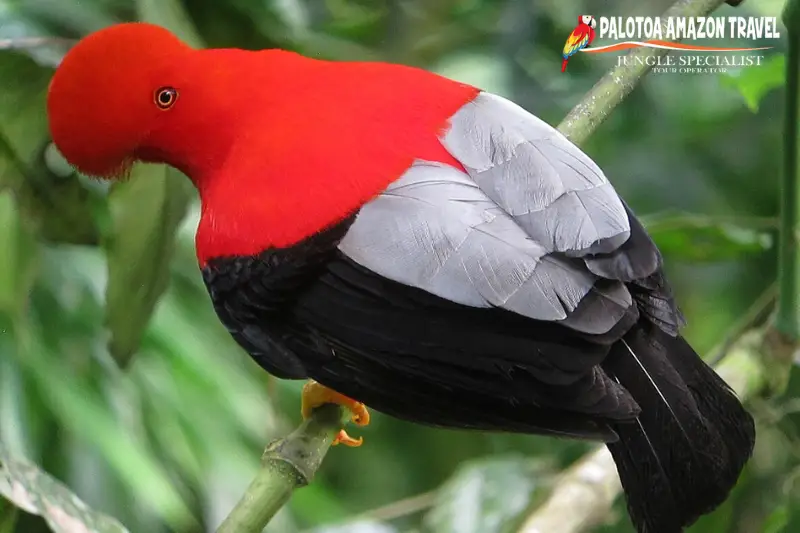
Cloud forest arrives midway through. Andean Cock-of-the-rock sightings happen reliably along this stretch and the Spectacled Bear occasionally shows near the road. Worth staying awake for since neither species appears in the lowland jungle further down.
River ports mark the end of road travel. Boats take over from here and the road doesn’t come back. The journey is long but the landscape changes enough throughout to make it feel like useful time rather than just distance covered.
Manu operates on strict zone rules. Access conditions, wildlife density, and logistics vary enough between them that booking national park tours without understanding the differences consistently leads to disappointment.
The Cultural Zone runs along the Andean descent, fully accessible by road from Cusco with no permits needed. Secondary forest, cloud forest, local communities, and the lowest entry cost into Manu. Megafauna avoids settled areas but the Cock-of-the-rock lek here delivers one of the more dependable wildlife encounters in the region.
The Reserved Zone requires permits and a river journey down the Madre de Dios. Primary rainforest, giant otters, jaguars, black caimans, almost no other visitors. A handful of authorized operators hold legal access to this area. Five days minimum makes the travel time worthwhile.
The Intangible Zone is permanently and completely closed. Uncontacted communities live there and no exceptions exist.
Zone summary:

Road access from Cusco keeps things straightforward here. Three to four day itineraries work well and costs stay considerably lower than a Reserved Zone expedition.
The Cock-of-the-rock lek is the main wildlife draw. Males display at fixed sites each morning in numbers reliable enough to make viewing nearly guaranteed. That kind of consistency is harder to find deeper in the jungle where animals spread across much larger territory.
Travelers specifically after giant otters or black caimans need to push further into the park. For those with tighter time or budget, Cultural Zone national park tours deliver real value without the logistical complexity of the interior.
Permits, river transport, and five days minimum are the baseline requirements here. The restricted operator authorization keeps visitor numbers genuinely low, and that directly affects how wildlife behaves in the area called Reserved zone.
Primary forest with no logging history means animals haven’t learned to avoid humans. They stay visible longer, feed in open areas, and don’t disappear at the sound of a boat engine. Lodges run on limited generator power in the evenings only.
Giant otter encounters, macaw clay lick visits, and realistic jaguar sighting opportunities are all specific to this zone. Travelers who put in the required time consistently rate these national park tours among the best wildlife experiences they have had anywhere.

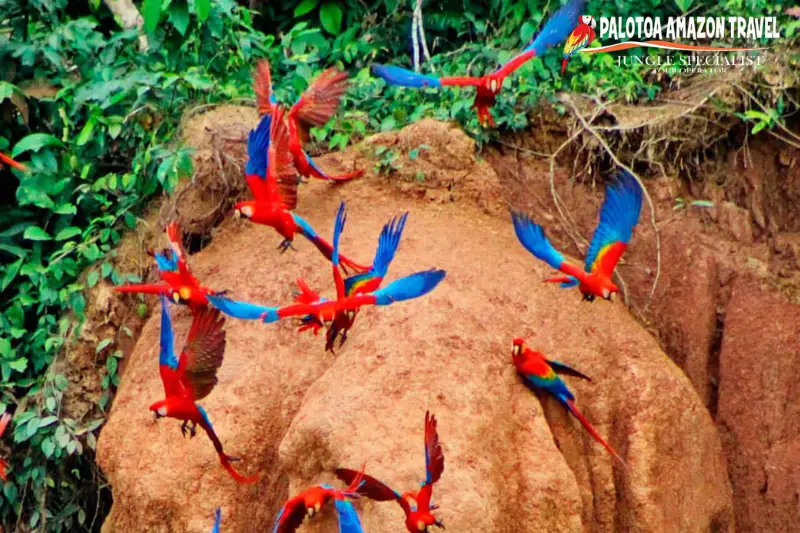
Boats leave before sunrise and position at a blind in complete darkness. The group waits without making noise. As light arrives, parrots and macaws start landing on the exposed clay bank, sometimes hundreds of birds feeding simultaneously from the mineral wall.
This is geophagy. Seeds and unripe fruits in the local diet carry natural toxins, and the clay neutralizes those compounds in the stomach before they cause harm. It happens every morning at established lick sites because it’s a nutritional requirement, not a random gathering.
Silence is non-negotiable. One sudden sound clears the entire bank immediately and ends the feeding session. Guides enforce this without exceptions. The visit wraps up as the flocks disperse and the itinerary moves toward the oxbow lakes.
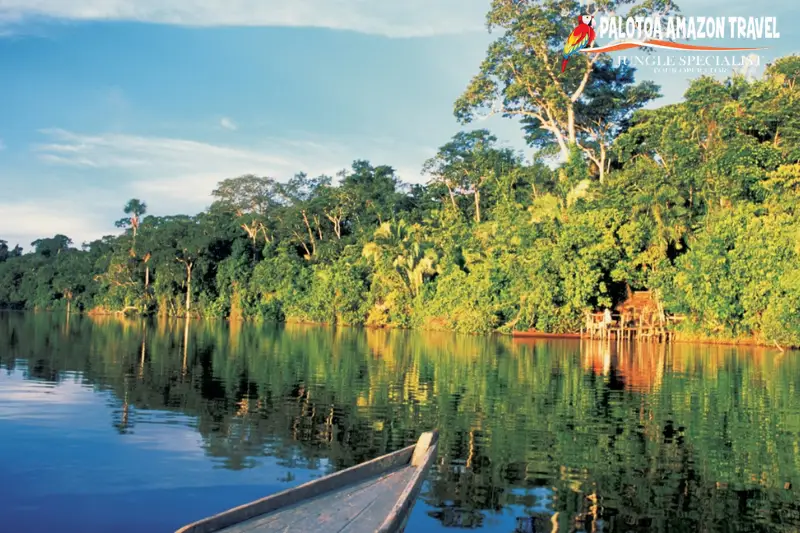
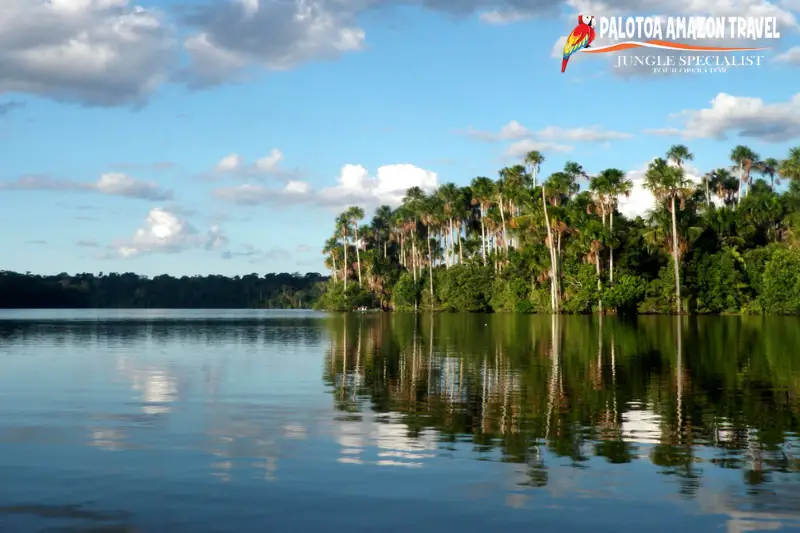
Oxbow lakes, called cochas, form when a river cuts off one of its own bends and leaves a still, fish-rich lagoon behind. Animals concentrate around these lakes in open water rather than behind dense forest cover, which makes them the most productive wildlife locations in the park.
Giant River Otters are the headline attraction. Family groups hunt together, surface frequently, and approach boats out of what appears to be genuine curiosity. A single sighting on a healthy lake regularly runs over an hour of active behavior rather than a brief glimpse. The species needs clean, undisturbed water which is why encounters like this stay limited to the Reserved Zone.
Silent catamarans are used on the cochas specifically to avoid disrupting hunting. Sightings tend to be long enough to actually follow what the animals are doing.

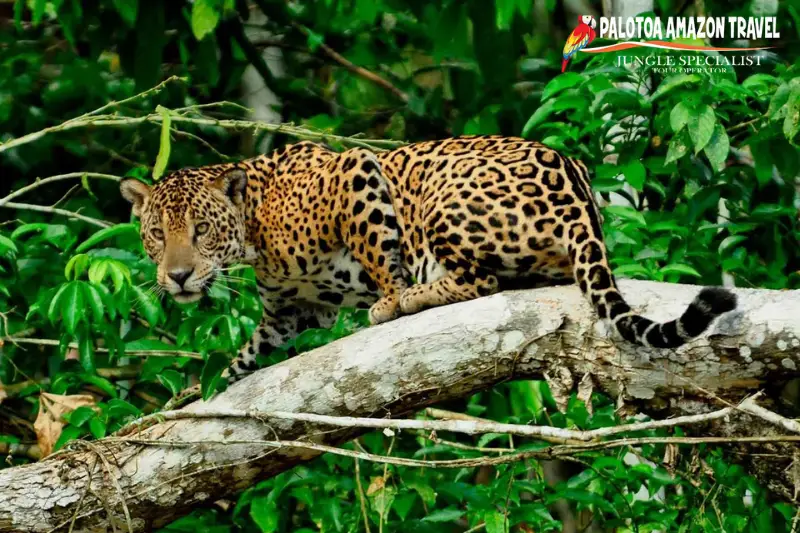
No Manu itinerary guarantees a jaguar and any operator who says otherwise isn’t being honest. The animal is naturally elusive and dense forest gives it every advantage over observers. The Reserved Zone offers the best available odds in accessible Peru but that doesn’t make a sighting certain.
Riverbanks produce more encounters than forest interiors. Jaguars hunt along shorelines, cross the Madre de Dios between banks, and use exposed beaches for movement and warmth. Early morning river transits with guides scanning the forest-water edge is when most sightings actually occur.
Dry season, roughly May through October, drops water levels and exposes sandy beaches the cats use regularly. Timing the trip during this window is the most practical way to improve odds without changing anything else about the itinerary.
Long-sleeved lightweight shirts and long pants regardless of the heat. Exposed skin in the rainforest means constant insect contact, including sandflies small enough to pass through standard mesh. Light colors attract fewer insects than dark fabrics and synthetics dry in a few hours while cotton stays wet most of the day.
Standard repellent doesn’t hold up here. Products with 30 to 50% DEET or 20% Picaridin are what actually work in these conditions. A travel clinic appointment at least six weeks before departure covers Yellow Fever vaccination requirements and malaria prophylaxis specific to this part of the Peruvian Amazon.
Five things that genuinely matter on any Manu national park tour:

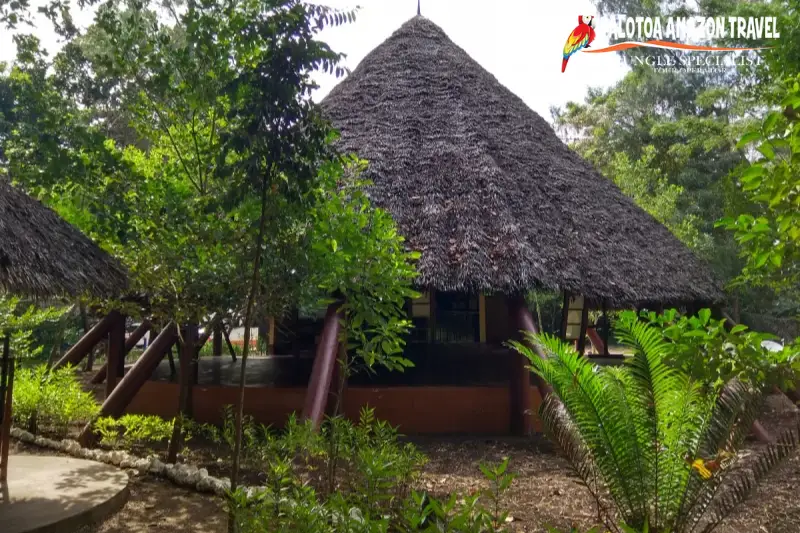
Eco-lodges are the standard on Manu national park tours, not tent camping. Open-air wooden structures on stilts, ventilated rather than climate-controlled, keeping ground moisture and insects out while the surrounding environment stays fully present. Built for function rather than comfort ratings.
Facilities are basic by design in the Reserved Zone. The evening generator runs and handles device charging. Solar-heated water is available and works better in the afternoon. No connectivity exists inside the reserve at all. Travelers who need internet access or standard hotel facilities should factor this in before booking a deep jungle itinerary.
Luxury Amazon lodges in Peru tend to operate near urban areas where megafauna stays away. Location inside the reserve is what drives wildlife access and the facilities honestly reflect that priority.
Both deliver real Amazon experiences with genuine wildlife. Differences come down to how you get there, how many days you have, and how much visitor activity surrounds you.
Tambopata sits near Puerto Maldonado, short flight from Cusco, three to four days works well, logistics are uncomplicated, wildlife viewing is reliable and visitor numbers run higher than Manu.
Manu requires road and river travel from Cusco and five to seven days minimum. What that returns is fewer people, higher biodiversity, and meaningfully better odds on species that don’t appear reliably in easier-access areas.
Available time is usually what decides this for most travelers.

Zone selection first. Cultural Zone for 3 to 4 day trips or tighter budgets. Reserved Zone for travelers who want the full experience and can commit the days it requires.
Operator verification before any payment. Only agencies registered with DIRCETUR and holding valid Reserved Zone permits can legally operate inside the protected interior as PATOLOA AMAZON TRAVEL. Checking this directly is the only reliable way to separate legitimate operators from those advertising access they don’t actually hold, which is a real and common problem in this market.
Pack for humidity not heat alone, plan around having zero connectivity inside the reserve, and go into jaguar expectations honestly. Manu national park tours consistently deliver one of the strongest wildlife experiences available in South America for travelers who arrive prepared and with enough time allocated.