


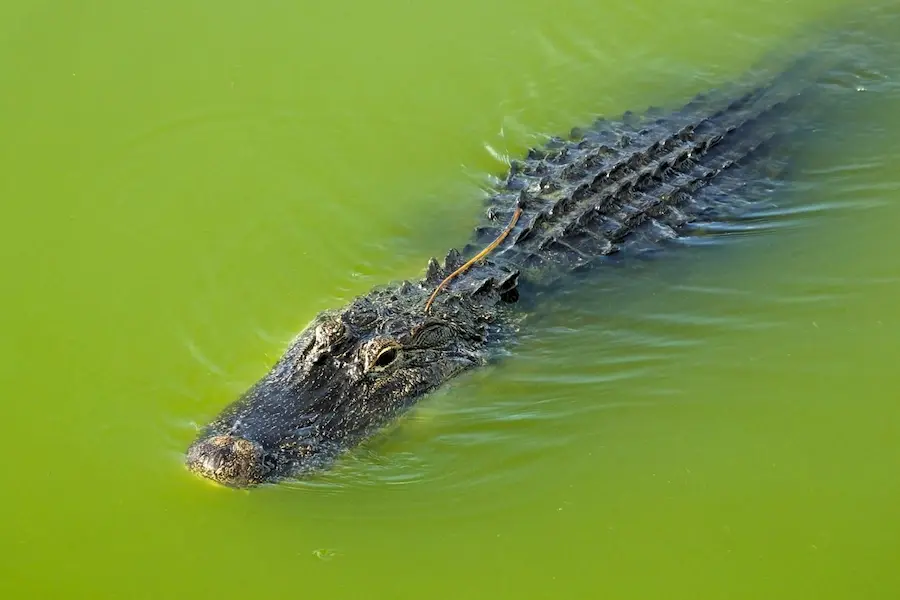
Are there crocodiles in the Amazon, or are the large reptiles swimming through its rivers and wetlands actually caimans? This is a common question among travelers planning to explore the Amazon rainforest, where dark waters, flooded forests, and remote lagoons provide ideal habitats for some of South America’s most fascinating predators. Although these reptiles are often called crocodiles, the animals most commonly encountered throughout the Amazon Basin belong to a different group: caimans.
The Amazon rainforest is home to an extraordinary network of rivers, lakes, swamps, and seasonally flooded forests. These environments support a remarkable diversity of wildlife, including giant river otters, anacondas, freshwater turtles, colorful birds, and several species of caimans. Some are relatively small and difficult to notice, while others can grow to impressive sizes and occupy an important position among the region’s aquatic predators.
You might be interested in reading: Amazon Rainforest Ecotourism and Local Communities
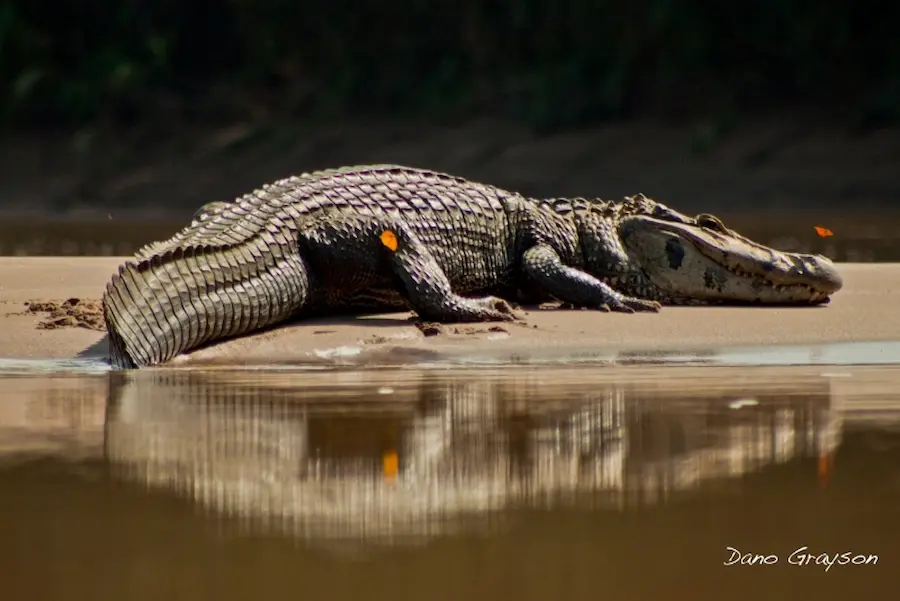
Are There Crocodiles in the Amazon Rainforest?
The short answer is that the Amazon rainforest is home to caimans rather than the true crocodiles commonly associated with parts of Africa, Asia, or coastal tropical environments.
Caimans belong to the family Alligatoridae, which also includes alligators. True crocodiles belong to a different family, Crocodylidae. Both families are part of the order Crocodylia, which explains why they share many physical characteristics.
Because they look similar, the word crocodile is sometimes used informally to describe almost any large, crocodile-shaped reptile. Scientifically, however, the distinction matters.
Differences Between Crocodiles and Caimans
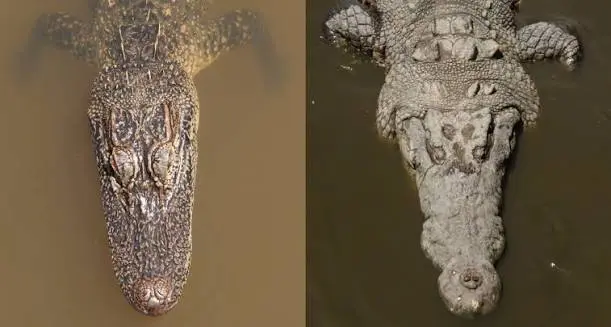
Crocodiles and caimans may look remarkably similar, but they belong to different families within the order Crocodylia. True crocodiles are classified under Crocodylidae, while caimans belong to Alligatoridae, the same family as alligators. Although they share a common evolutionary ancestry, millions of years of adaptation have produced differences in their anatomy, geographic distribution, and preferred habitats.
Both groups are highly adapted to life in and around water. Their powerful tails provide propulsion, their armored skin offers protection, and the position of their eyes and nostrils allows them to remain almost completely submerged while monitoring their surroundings. These similarities explain why travelers frequently mistake Amazonian caimans for crocodiles, particularly when only part of the animal is visible above the water.
1. Snout Shape, Teeth, and Physical Characteristics
One of the most noticeable differences between crocodiles and caimans is the shape of their snouts. Many true crocodiles have relatively narrow, V-shaped snouts, while several caiman species have broader, more rounded heads. However, this distinction is not universal. Snout shape varies among species, reflecting differences in feeding habits, prey selection, and habitat preferences.
Their teeth also provide important clues. In many true crocodiles, the fourth tooth on each side of the lower jaw remains visible when the mouth is closed because it fits into a notch in the upper jaw. In caimans, these lower teeth are generally concealed by the upper jaw. This anatomical difference is more reliable than snout shape alone, although it can be difficult to observe from a safe distance.
2. Size, Strength, and Adaptations to Water
Body size is another important consideration when comparing crocodiles and caimans. Some true crocodile species, particularly the saltwater crocodile, can reach lengths exceeding six meters, making them among the largest living reptiles. However, caimans also include remarkably large species, especially the black caiman (Melanosuchus niger), which can exceed five meters in exceptional cases.
Other Amazonian species are considerably smaller. Spectacled caimans commonly reach approximately two meters, while Cuvier’s dwarf caiman generally remains much shorter. These differences influence the types of prey they capture, the habitats they occupy, and their interactions with other animals.
3. Freshwater Habitats and Geographic Distribution
Although crocodiles and caimans share many biological characteristics, their geographic distributions differ considerably. True crocodiles occur across tropical regions of Africa, Asia, Australia, and the Americas. Depending on the species, they inhabit rivers, lakes, estuaries, coastal wetlands, and other aquatic environments.
Caimans, by contrast, are native to Central and South America and are particularly associated with freshwater habitats. Several species inhabit the Amazon Basin, where extensive river networks, wetlands, and seasonally flooded forests provide suitable conditions for feeding, shelter, and reproduction.
Caiman Species Found in the Amazon Rainforest
The Amazon Basin supports several species of caimans, each adapted to different freshwater environments. Although they share certain physical characteristics, they vary in body size, coloration, behavior, and habitat preferences.
Some species are frequently associated with large rivers and open lakes, while others inhabit narrow forest streams where dense vegetation provides shelter. These differences allow multiple crocodilian species to occupy the same broader rainforest region without depending on identical ecological resources.
1. Black Caiman (Melanosuchus niger)
The black caiman is the largest caiman species and one of the most powerful predators inhabiting Amazonian freshwater ecosystems. Adults can reach impressive dimensions, with exceptional individuals exceeding five meters in length.
Its dark coloration helps it blend into shaded waterways, particularly in deep lakes and slow-moving rivers. The species also has a broad head, strong jaws, and heavily armored skin.
2. Spectacled Caiman (Caiman crocodilus)
The spectacled caiman is one of the most widespread crocodilians in tropical America. Its name comes from a bony ridge between the eyes that resembles the bridge of a pair of spectacles.
This species generally reaches approximately two meters in length, although individuals vary in size. Its coloration ranges from olive green to brown or gray, often with darker markings that help conceal it among vegetation.
3. Smooth-Fronted Caiman (Paleosuchus trigonatus)
The smooth-fronted caiman is a forest-associated species that inhabits parts of the Amazon Basin. Compared with larger caimans, it has a more compact body and is frequently found in smaller waterways.
Its heavily armored skin and relatively narrow head distinguish it from the broad-headed black caiman.
4. Cuvier’s Dwarf Caiman (Paleosuchus palpebrosus)
Cuvier’s dwarf caiman is among the smallest living crocodilians. Despite its relatively modest size, it possesses strong jaws, armored skin, and the same basic aquatic adaptations found in larger species.
It inhabits freshwater environments throughout parts of tropical South America, including the Amazon Basin.
Where Caimans Live and How They Survive in the Amazon
The Amazon’s waterways are constantly changing environments. Rivers rise and fall with seasonal rainfall, lakes become connected to surrounding forests, and aquatic habitats expand or contract throughout the year.
Caimans have adapted to these conditions through a combination of physical characteristics and flexible behavior. Their ability to remain submerged, regulate body temperature, and capture different types of prey allows them to survive across a variety of freshwater ecosystems.
1. Rivers, Oxbow Lakes, and Flooded Forests
Rivers provide important movement corridors for caimans, connecting different freshwater habitats across the Amazon Basin.
Larger species may occupy slow-moving channels, riverbanks, and sheltered areas where prey is available. Smaller species often use streams and waterways surrounded by dense forest.
Oxbow lakes are especially important habitats. These lakes form when a river changes course and leaves behind a curved section of water separated from the main channel.
2. Hunting Strategies and Feeding Behavior
Caimans are primarily ambush predators. Instead of pursuing prey over long distances, they often remain still and wait for an opportunity to strike.
Their dark or patterned coloration helps them blend into the water and surrounding vegetation. With only their eyes and nostrils exposed, they can monitor nearby movements while remaining difficult to detect.
Young caimans generally consume insects, crustaceans, small fish, and other aquatic animals. As they grow, their diets may expand to include larger fish, turtles, birds, and mammals.
3. How Seasonal Flooding Changes Their Habitat
Seasonal rainfall plays an important role in determining where caimans can move and find food. During periods of high water, rivers may overflow into surrounding forests, connecting lakes, streams, and temporary wetlands. This expansion allows aquatic animals to access areas that remain dry during other parts of the year.
Caimans can take advantage of these changes by moving into flooded forests where fish and other prey become available.
Are Amazon Caimans Dangerous to Humans?
Caimans are wild predators, and encounters should always be approached with caution. However, their behavior is often misunderstood because of dramatic portrayals of crocodilians in films and wildlife documentaries.
Most caimans do not actively seek interactions with people. They may remain motionless, move away, or respond defensively depending on the circumstances.
The potential danger varies according to species, body size, proximity, and human behavior. Large black caimans are capable of causing serious injuries, while smaller species can also bite when threatened.
1. When Caimans May Become Aggressive
Caimans may react defensively when they feel threatened, particularly if a person approaches too closely or attempts to handle them.
Nesting periods can also influence behavior. Female crocodilians may guard nesting areas and protect their young, making close approaches especially inappropriate.
Large caimans may present additional risks in water, where their strength and ability to move rapidly can make encounters dangerous.
2. Safety Precautions During River and Jungle Excursions
Travelers exploring Amazonian rivers and wetlands should follow the instructions of experienced guides who understand local conditions and wildlife behavior.
Maintaining a safe distance is essential, particularly when observing large caimans near riverbanks or lakes.
Visitors should avoid swimming in unfamiliar freshwater habitats and should never enter the water simply because no animals are visible.
Where to See Caimans in the Peruvian Amazon
The Peruvian Amazon offers several destinations where caimans inhabit natural freshwater ecosystems. Rivers, lakes, wetlands, and flooded forests provide suitable conditions for different species, although sightings depend on their behavior and environmental conditions.
Two of the country’s most important rainforest destinations are Manu and Tambopata. Both protect extensive areas of tropical forest and support remarkable wildlife diversity.
For travelers interested in observing caimans, understanding the characteristics of each destination can help establish realistic expectations.
1. Manu National Park and Its Oxbow Lakes
Manu National Park is one of Peru’s most important protected natural areas, encompassing ecosystems that extend from the Andes into lowland Amazon rainforest.
Its lower-elevation environments include rivers, wetlands, and oxbow lakes that support diverse aquatic wildlife.
Black caimans and other crocodilians inhabit suitable freshwater habitats within the wider Manu region.
Oxbow lakes are particularly interesting because their relatively calm waters provide conditions for fish, turtles, aquatic birds, and large predators.
Depending on the authorized route and natural conditions, travelers may have opportunities to observe caimans during guided excursions.
2. Tambopata National Reserve and Lake Sandoval
Tambopata National Reserve is another important destination for wildlife observation in southeastern Peru.
The region contains tropical rainforest, rivers, wetlands, and lakes that support numerous species of mammals, birds, reptiles, and amphibians.
Lake Sandoval is particularly well known for its freshwater biodiversity.
The lake and surrounding forest provide habitat for giant river otters, aquatic birds, turtles, and caimans.
Guided excursions through suitable observation areas can provide opportunities to appreciate these animals in their natural environment.
However, wildlife sightings are never guaranteed, and visitors should avoid expecting animals to appear at specific times or locations.
3. Wildlife Observation With Local Amazon Guides
Experienced local guides play an important role in helping travelers observe caimans responsibly.
Their familiarity with rivers, lakes, and seasonal conditions can help them recognize areas where crocodilians may be present.
A guide may identify a caiman through subtle movements in the water, the position of its eyes above the surface, or its silhouette near vegetation.
Local knowledge is also valuable for interpreting animal behavior and understanding how different species interact with their surroundings.
Beyond locating wildlife, guides help visitors maintain appropriate distances and avoid activities that could disturb animals or create unnecessary risks.
Best Conditions for Observing Caimans in the Wild
Observing caimans in the Amazon requires patience and an understanding of natural conditions. These reptiles are well adapted to remaining hidden, and their visibility can change throughout the day and across different seasons.
Factors such as rainfall, water levels, temperature, vegetation, and animal behavior all influence the likelihood of an encounter.
Rather than expecting guaranteed sightings, travelers should approach wildlife observation as an opportunity to understand how animals behave in their natural habitats.
1. Daytime vs. Nighttime Wildlife Encounters
Caimans can be active during both daylight and nighttime hours, although activity patterns vary by species and environmental conditions. During the day, they may rest near riverbanks, remain partially submerged, or occupy sheltered areas where they can regulate their body temperature. At night, caimans may become easier to detect because their eyes reflect light.
This reflection is produced by a specialized structure that helps improve vision under low-light conditions. Guided nighttime excursions sometimes use this characteristic to locate crocodilians along waterways.
However, artificial lighting should be used carefully to avoid disturbing wildlife, and nighttime observation should only take place under appropriate safety conditions.
2. Rainy Season vs. Dry Season Sightings
Seasonal water levels can significantly affect where caimans are found. During drier periods, declining water levels may concentrate some aquatic animals in remaining lakes, channels, and permanent wetlands.
This can make certain habitats more suitable for observation, depending on local conditions. During the rainy season, rising rivers may flood extensive forest areas, allowing caimans to move into a wider range of environments. As a result, animals may become more dispersed and difficult to locate in particular areas. Neither season guarantees sightings, and conditions vary throughout the Amazon Basin.
3. Responsible Wildlife Photography
Photographing caimans can be rewarding, but their well-being and visitor safety should always take priority.Because these reptiles often remain partially submerged, a camera with optical zoom can help capture details without requiring close approaches.
Travelers should avoid leaning dangerously over boats or attempting to move closer to animals resting along riverbanks. Using flashlights or camera equipment to provoke a reaction is also inappropriate.
Understanding the Amazon’s Most Remarkable Aquatic Predators
The question of whether crocodiles inhabit the Amazon reveals an important distinction between two closely related groups of reptiles. While true crocodiles occur in other tropical regions, the Amazon’s native crocodilians are caimans, ranging from small forest-dwelling species to the powerful black caiman.
These animals are essential members of the rainforest’s freshwater ecosystems. Their adaptations allow them to survive in rivers, lakes, wetlands, and flooded forests, where they interact with numerous other species and contribute to complex ecological relationships.
