Matsigenka Culture: History, Traditions, and Daily Life

Some communities get written about constantly and understood almost never. The Matsigenka sit in that second category. Their forest, their social logic, their spiritual world, none of it maps cleanly onto outside frameworks. That gap is worth taking seriously before anything else.

Who the Matsigenka actually are

The matsigenka tribe are indigenous people of the Peruvian Amazon. Communities sit across Cusco, Ucayali, and Madre de Dios, and those regions are not interchangeable. Different water systems, different ecological pressure, different histories of outside contact. The forest is not scenery here. It is the actual operating system the culture runs on.

Settlement organizes around family. Small related groups form the base unit, resources move within them rather than being held individually, and decisions reach consensus rather than flowing down from any formal authority. That pattern holds across regions regardless of local variation.

Three things stay consistent across most matsigenka tribe communities:

  • Semi-nomadic movement driven by seasonal food and water availability rather than fixed territorial logic.
  • Oral tradition carrying the entire weight of knowledge transmission without written backup of any kind.
  • A subsistence economy running on agriculture, hunting, fishing, and foraging with no market exchange involved.

matsigenka

Where the history actually starts

Matsigenka peru ancestors lived in this forest for centuries before outside contact changed anything about that existence. No single event defines their history. What defines it is slow accumulation of pressure, adaptation, and survival that many comparable communities did not manage.

Spanish colonization reached remote territories eventually. The matsigenka peru communities that came through that period used distance and internal coherence rather than organized resistance. Resilience here was a continuous choice across generations, not a dramatic moment.

Contact with neighboring tribes shaped things too. Trade, displacement, exchange, conflict, all of it left traces in what matsigenka peru communities are today. The relationship with the forest stayed constant through all of it. That never broke.

Language and why it carries everything

The matsigenka tribe language belongs to the Arawakan family, a group spanning a large portion of South America. The language is oral. No long writing tradition exists behind it and the culture was never organized around one.

Storytelling does what writing does elsewhere. History, values, ecological knowledge, spiritual frameworks, all of it moves through spoken narrative from elders to younger people. Understanding the machiguenga culture and traditions starts here because almost everything else flows from this foundation directly.

Documentation work is happening right now across several communities. Oral histories are being recorded. Written forms are in development. These matsigenka peru efforts reflect a clear understanding that language and culture cannot be saved as separate things.

Territory and environment

The matsigenka tribe occupies remote Amazonian territory across three Peruvian regions. Cusco and Ucayali hold significant populations. Madre de Dios carries the strongest association with matsigenka peru in both research and travel contexts. Each region brings different ecological conditions and different pressure histories.

The forest supplies everything the daily economy needs. Food, materials, medicine, spiritual orientation, all from the same environment surrounding the settlements. Slash-and-burn agriculture works with the forest’s nutrient cycles rather than fighting them.

Madre de Dios communities maintained traditional practice with unusual continuity. Remoteness protected the pace of outside disruption. That same remoteness limited healthcare and education access for generations, which is a real tension that does not resolve neatly.

matsigenka

The matsigenka within Manu

The indigenous communities of Manu have lived in this territory for centuries before any park boundaries existed around them. The matsigenka tribe shaped the ecology of that land actively. Both histories, human and natural, run together here.

Discover Manu Park Peru and this becomes obvious quickly. The matsigenka peru presence within the park’s reserved and buffer zones is not background context. It is part of what the place actually is. Separating the two produces an incomplete picture of the region.

Is Manu Park worth visiting gets asked constantly. The honest answer goes past species counts. Living cultures alongside living ecosystems is a rare combination anywhere. What are the best ways to explore Manu national park depends entirely on what the visitor wants to understand, and for anyone serious about that question the matsigenka tribe is central rather than incidental.

How communities are organized

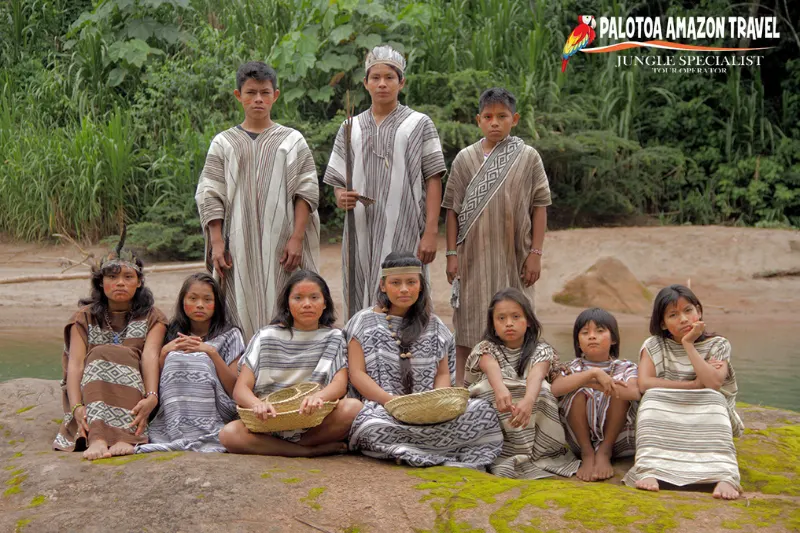
Family groups rather than institutions form the backbone of matsigenka tribe organization. Extended families become communities, communities decide collectively, elders carry authority through accumulated respect rather than assigned role. Everyone inside the system understands the obligations it carries.

Gender roles run broadly consistent across communities but flex considerably in practice. Women handle domestic and agricultural work. Men take on hunting and heavier physical tasks. Cooperation holds things together far more than any strict division does.

Resource sharing is structural. Food, tools, labor circulate through the community as a matter of how the system works rather than individual generosity. That distinction matters. The architecture itself carries the obligation.

Traditions and what keeps them alive

Matsigenka peru traditions are not historical artifacts. They are active practices maintained because they serve real functions right now. Seasonal festivals mark agricultural and ecological transitions. Communal gatherings reinforce bonds. Ceremony addresses spiritual dimensions of events the community treats as genuinely significant.

Shamans hold a position in matsigenka tribe life that most outside descriptions miss entirely. They are healers, spiritual intermediaries, and practical advisors. The role is not ceremonial in any limited or decorative sense.

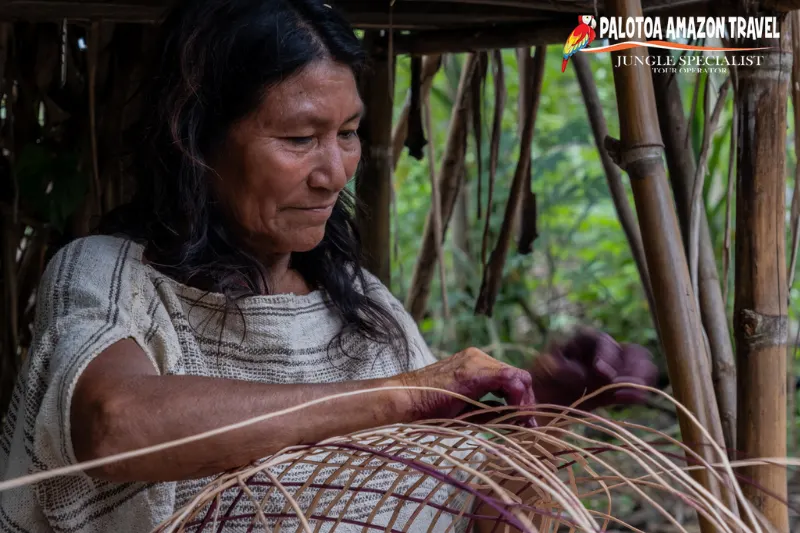
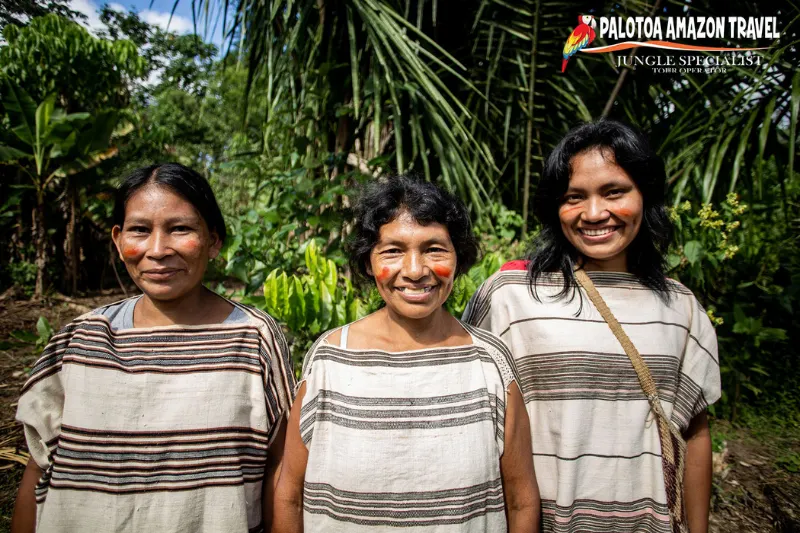
Traditional clothing made from natural fibers signals community affiliation and status through pattern and color. Making these garments transmits cultural knowledge. Learning the craft is how younger generations absorb identity, not just technique.

Key traditions across matsigenka peru communities include:

  • Seasonal festivals and communal gatherings tied to agricultural and ecological cycles.
  • Oral storytelling as the primary mechanism for transmitting history and cultural knowledge.
  • Shamanic practice combining ceremony with plant-based medicine and spiritual intermediation.
  • Traditional clothing production encoding cultural identity through pattern and material.
  • Communal distribution of food, labor, and resources across family groups.

matsigenka

Spirituality and how the world works

The matsigenka tribe cosmology does not separate spiritual from physical. Spirits inhabit the forest, rivers, animals, plants. They are active presences influencing real events, not theological abstractions sitting apart from daily life.

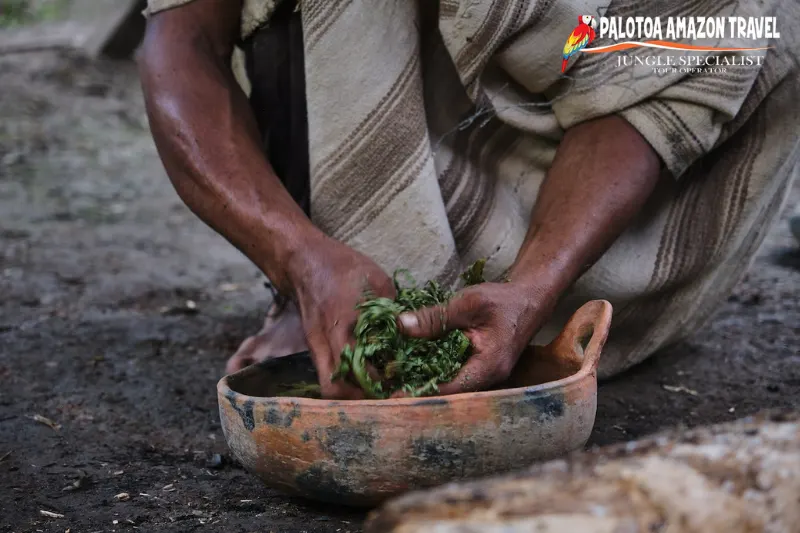
Shamans navigate that landscape for the community. The role takes years of learning, deep botanical knowledge, and capacity for states that allow communication with entities the community treats as present and real. Ritual, song, dance, plant preparations, all part of the same practice.

Spiritual ceremonies across matsigenka peru communities commonly involve:

  • Ritual offerings honoring spirits of natural entities within community territory.
  • Plant-based preparations used for healing and direct spiritual communication.
  • Songs and dances called on for protection and maintaining cosmic balance.
  • Sacred storytelling passing spiritual knowledge between generations actively.
  • Ceremonies marking life transitions and significant seasonal shifts.

Food, farming, and daily survival

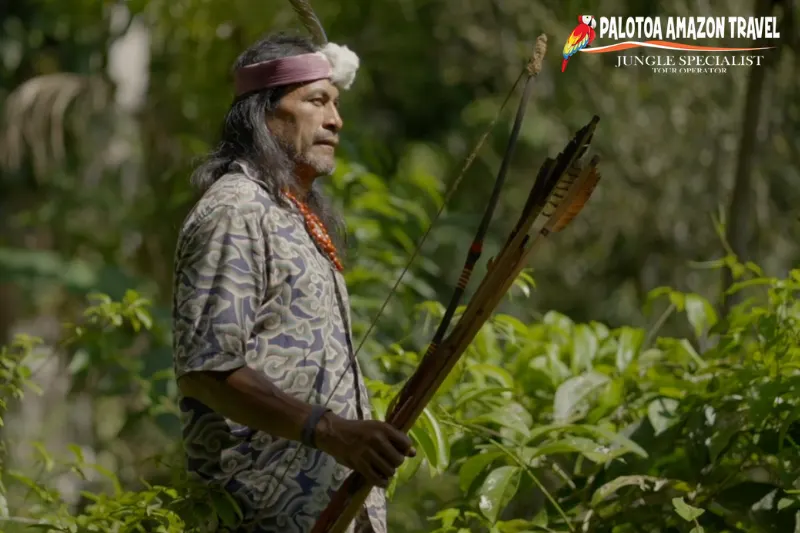
The matsigenka tribe daily economy runs directly on the forest. Slash-and-burn cultivation of manioc, maize, and bananas follows cycles maintaining soil productivity without permanent clearing. River fishing supplies protein. Hunting adds forest game. Foraging fills the diet with wild foods cultivation alone does not cover.

None of this is simple knowledge. Reading the river correctly at the right season, distinguishing edible from medicinal plants, tracking game through dense vegetation, all of it represents expertise built across centuries and passed through observation rather than instruction.

Key subsistence practices across matsigenka peru communities include:

  • Slash-and-burn agriculture managing manioc, maize, and bananas through rotational plots.
  • River fishing using traditional methods adapted to local water and seasonal conditions.
  • Forest hunting supplementing agricultural and fishing production with game protein.
  • Foraging wild fruits, nuts, and edible plants throughout community territory.
  • Communal sharing of food and labor across family groups within each settlement.

matsigenka

Art, music, craftsmanship

Creative work in matsigenka tribe communities carries cultural information. Weaving, pottery, basket-making, tool production encode meaning in patterns and materials that have significance within the community’s own framework. Making these objects is learning part of the culture’s actual language.

Music accompanies ceremony rather than functioning as entertainment separate from social context. Flutes and drums are primary instruments. Musical skill and spiritual knowledge develop together in most practitioners because the matsigenka tribe does not separate those two things.

Core practices include:

  • Weaving with plant fibers producing textiles and ornaments with culturally specific pattern meaning.
  • Traditional music with flutes and drums used across ritual and community contexts.
  • Basket, pottery, and tool production combining practical design with embedded cultural significance.

What threatens these communities

Deforestation is the most immediate physical threat to matsigenka tribe territory. Logging and agricultural expansion from outside push into land managed by these communities for generations. When the forest goes the subsistence economy built entirely on it collapses.

Illegal mining causes a different category of damage. Rivers in Madre de Dios carry severe mercury contamination from gold operations. Water that was the protein foundation for communities becomes unusable. Recovery runs in decades.

Cultural erosion moves slowly but with comparable long-term effect. Communities nearest roads and economic activity face assimilation pressure more remote groups do not. Healthcare 

Current challenges facing matsigenka peru communities include:

  • Deforestation from logging and agricultural expansion pressing into indigenous territories.
  • Illegal mining contaminating rivers and destroying aquatic food sources across Madre de Dios.
  • Cultural erosion concentrated in communities near roads and outside economic activity.
  • Limited healthcare and formal education access in the most remote traditional communities.

How the matsigenka tribe is pushing back

Land rights advocacy became central to community strategy over recent decades. Legal recognition of territorial boundaries gives tools against encroachment that informal occupation never provided. Working with NGOs and government bodies moved this from community concern to actionable legal framework.

Tours in Manu Reserved Zone show one way eco-tourism can work on terms that benefit indigenous communities directly. When matsigenka peru communities control visitor access conditions, economic benefit stays local and cultural integrity stays under community management rather than outside control.

Things to do in the Amazon rainforest for visitors interested in more than wildlife increasingly includes cultural encounters with communities like the matsigenka tribe. The experiences that actually work are built around community consent and genuine exchange rather than observation from a comfortable distance.

matsigenka

What preservation actually looks like

The most durable work comes from inside communities rather than being applied from outside. Oral history documentation, community-led programs teaching traditional knowledge and language, researcher collaboration on community terms, all of these treat preservation as ongoing practice rather than emergency rescue.

The matsigenka tribe relationship to their own heritage is pragmatic. The knowledge, the language, the ecological understanding built over centuries carries functional value right now. Communities understand that distinction and it shapes how their preservation work operates in practice.

Frequently asked questions

Who are the Matsigenka and how is their society organized? 

The matsigenka tribe are indigenous people of Peru’s Amazon across Madre de Dios, Cusco, and Ucayali, where family-based groups form the foundation, consensus drives all significant decisions, and elders carry authority through accumulated respect rather than formal position. Communal sharing of food, labor, and resources is structural rather than voluntary, built into how the social system operates rather than depending on individual goodwill.

How does the rainforest shape matsigenka peru daily life? 

For matsigenka peru the forest functions as physical home and sacred framework simultaneously, supplying food through slash-and-burn agriculture, river fishing, hunting, and foraging alongside medicinal plants, building materials, and the spiritual landscape the entire cosmology is organized around. Ecological knowledge accumulated across generations guides every significant aspect of how communities operate day to day.

What characterizes the Matsigenka language and oral tradition? 

The matsigenka tribe language belongs to the Arawakan family and operates entirely through oral tradition, with storytelling carrying the full transmission load for history, ecological knowledge, and cultural values between generations. Current revitalization work across matsigenka peru communities focuses on recording oral histories and developing written forms to extend language continuity beyond the conditions that oral-only transmission depends on.

What roles do spirituality and shamanism play? 

The matsigenka tribe cosmology treats spirits as active presences in the natural world rather than abstract concepts, with shamans working as intermediaries between physical and spiritual realms through ritual, plant-based medicine, song, and ceremony. Cultural life also runs through seasonal festivals, communal gatherings, weaving, music, and craftsmanship that encodes cultural knowledge inside functional objects rather than separating art from practical use.

What challenges do matsigenka peru communities face and how are they responding?

Matsigenka peru communities face deforestation, river contamination from illegal mining across Madre de Dios, cultural erosion near roads and towns, and limited service access in remote areas. Responses include land rights advocacy, selective eco-tourism engagement through Tours in Manu Reserved Zone, communication technology adoption, and community-driven language documentation treating preservation as living practice rather than archival work.


This website uses cookies to improve your experience.